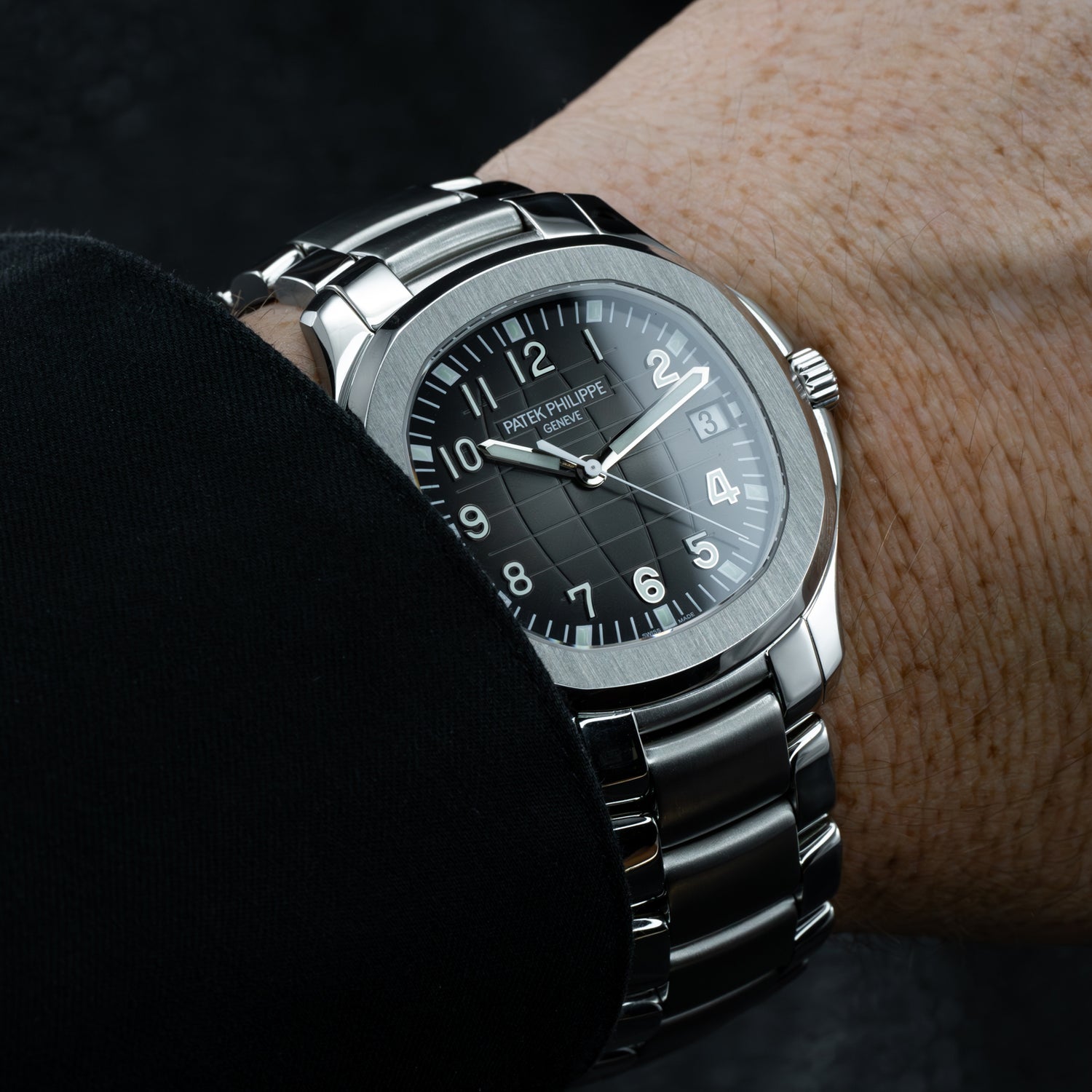

Panerai built its reputation underwater, supplying the Italian navy's combat divers decades before it ever sold a watch to a civilian, and the Luminor and Radiomir lines still carry that history directly in their case shape and crown-guard design. This guide walks through what Luminor Marina, Luminor 1950, Radiomir, Luminor Due, and Quaranta actually look and feel like, what the P-series in-house movement means for you, and what to check before buying pre-owned, including sizing, since case dimensions matter more with Panerai than with almost any other brand.
Panerai gets treated two ways online. Half the conversation calls it a design house riding a military backstory, the other half calls it one of the most soulful brands in modern watchmaking. Both takes miss the actual story, so let's get into it properly, starting with where the case shape actually came from before it was ever a fashion statement. This Panerai buyer's guide walks through every current family on those terms.
What's in this guide
- Where Panerai actually comes from
- Luminor Marina
- Luminor 1950
- Radiomir
- Luminor Due
- Luminor GMT and complications
- Quaranta
- Materials: what each case actually looks and feels like
- Straps and the crown-guard lever
- Does the movement actually matter with Panerai?
- Dial and size variety worth knowing
- Sizing: how a Panerai actually wears
- What each function actually does, day to day
- Notable references and partnerships worth knowing
- A quick note on reference numbers
- How to choose between Luminor Marina, Luminor 1950, Radiomir, Due, and Quaranta
- How Panerai compares to Rolex and Omega on value
- What to check before buying pre-owned
- Price and value: what actually holds
- Where KROLUX fits in
Where Panerai actually comes from
Florence, 1860s, founded as a watchmaking workshop and instrument supplier before it ever built the watches it's known for now. The turning point came in the 1930s and 1940s, when the Royal Italian Navy commissioned Panerai to build instruments for its combat divers, including the earliest Radiomir prototypes with radium-based luminous material that made dial legibility possible underwater in near-zero visibility, a genuinely serious engineering problem to solve decades before modern lume compounds existed.
That naval commission is the actual soul of the brand. The oversized case, the cushion shape, and the heavy legibility-first dial all trace back to one requirement, a diver in freezing water with limited visibility had to read the time without hesitation. Everything modern Panerai does aesthetically traces back to that original military brief, and it's why the brand's design language reads so differently from a traditional dress or dive watch built for a civilian market from day one, the proportions were dictated by a diver's actual needs.
Panerai stayed a genuinely obscure name outside Italy for decades after that naval work, a specialist military supplier rather than a consumer watch brand. That changed in the 1990s when the brand relaunched for civilian collectors, and the design language that had been refined purely for underwater legibility suddenly found an entirely new audience that loved it for exactly the reasons it existed in the first place, genuine proportions built around an actual functional brief rather than a styling exercise dressed up as one.
Here's what each current line is actually like to wear, with the naval history behind why it looks the way it does.
Luminor Marina: the everyday entry point

The Luminor Marina is the reference most people picture when they hear the word Panerai, the crown-guard lever, the cushion case, a clean three-hand dial with the brand's signature sandwich construction, two dial layers stacked so light shows through the cut-out numerals for maximum night legibility. It wears substantial and unmistakably purposeful, and it's available across a genuinely wide size and material range, the single reference most people mean when they picture Panerai in their head before they've ever tried one on. We've individually sourced four Luminor Marina pieces spanning 42mm to 44mm: the 42mm complete set pictured above, a 44mm stainless steel automatic (ref PAM01104), a manual-wind 8-day power reserve execution, and a carbon-fiber Carbotech case.
Luminor 1950: the case shape at its most historically proportioned

The Luminor 1950 keeps the crown-guard lever but sizes the case and lugs closer to the brand's original vintage proportions than the standard Marina does, a slightly different lug shape and a case that reads even more purpose-built. It's the pick for a collector who wants the historical case shape without moving all the way back to the Radiomir's lugless design. We've individually sourced three Luminor 1950 pieces, including a black titanium execution, a Tuttonero all-black ceramic GMT, and a ceramic Flyback chronograph.
Radiomir: the older, simpler silhouette

The Radiomir is the older, simpler case, wire lugs soldered directly to the case body, no crown guard, a cleaner and more vintage-feeling silhouette than the Luminor's protected crown. The Luminor added the now-iconic crown-protecting lever device in 1950, originally a functional necessity to keep the crown sealed at depth, since developed into the brand's single most recognizable design signature. If you want the more historically pure, understated silhouette, the Radiomir is the one to look at, and its lugless design tends to sit closer to the wrist than a Luminor case of the same diameter, since there's no crown-guard structure adding to the case's overall footprint. We've individually sourced a Radiomir 1940 in rose gold, a genuinely serious complication reference with a chronograph, 8-day power reserve, and GMT function together.
Luminor Due: the thinner, lighter modern take

The Luminor Due exists specifically to answer a real complaint, the classic Luminor case is thick and heavy, genuinely built for a diver rather than a boardroom. The Due keeps the recognizable crown-guard silhouette but slims the case height and reduces the weight considerably, making it a genuinely wearable daily option for buyers who love the Luminor look but not the Luminor bulk. It's the reference most likely to convert a buyer who admired Panerai's design from a distance but assumed it would never actually work on their wrist. We've individually sourced a Luminor Due 42mm in steel, box and papers.
Luminor GMT and complications: when the movement does more

Beyond the base three-hand and chronograph references, Panerai's complication pieces genuinely surprise buyers who assume the brand is all case and no mechanism. The Equation of Time reference we've individually sourced displays the actual difference between solar time and clock time, a complication normally reserved for the most serious high-watchmaking houses, wrapped in the same unmistakable Panerai case language. These references wear identically to their simpler siblings on the outside while carrying genuinely serious mechanical work underneath, a reminder that Panerai's case language works as a vehicle for genuinely high complications as much as a three-hand dive watch shape. We've individually sourced a Luminor GMT Equation of Time, ref PAM00656.
Quaranta: the compact modern line

Quaranta, Italian for forty, is Panerai's answer to buyers who want the brand's design language without its traditional oversized proportions. At a genuinely compact 40mm, it's built for wrists that would find a standard 44mm Luminor overwhelming, without losing the crown-guard silhouette or the sandwich-dial construction that make Panerai instantly recognizable. The BiTempo executions add a second time zone display for buyers who travel. It's the Panerai most likely to appeal to a buyer who's never owned one before but has been intimidated by the brand's traditional size, proof that the design language survives the size reduction intact. We've individually sourced a Luminor Quaranta BiTempo in the Luna Rossa colorway, tied to Panerai's America's Cup sailing team partnership.
Materials: what each case actually looks and feels like
Stainless steel: the default across most Luminor Marina and Due references, cool grey-white, durable, the most common material a first-time Panerai buyer encounters.
Titanium: used across select Luminor 1950 references specifically, noticeably lighter than steel at the same case size, a genuine benefit given how large Panerai cases run.
Ceramica: Panerai's matte black ceramic case material, used across select Luminor 1950 and GMT references, scratch-resistant in a way polished steel isn't and visually striking in its total absence of shine.
Carbotech: a proprietary carbon-composite material built from layered carbon fiber, extremely light and visually distinctive, with a woven texture that reads nothing like a traditional metal case, KROLUX's Luminor Marina Carbotech is a good example of how far this material departs from the brand's steel-and-titanium roots.
Rose gold (Oro Rosso): reserved for the most serious complication references, including the Radiomir chronograph we've individually sourced, warming the case considerably and pushing the piece toward a more formal collector category.
Across every material, Panerai's finishing stays deliberately understated, brushed rather than heavily polished surfaces, matching the brand's overall instrument-first identity. Even the gold references avoid the high-shine treatment more common on dress watches, keeping the tool-watch character intact regardless of what the case is actually made from.
Straps and the crown-guard lever
Panerai runs almost entirely on leather and rubber straps rather than metal bracelets, a deliberate choice that reinforces the dive-instrument heritage over a dress-watch bracelet feel. Leather straps dominate the Luminor Marina and Luminor 1950 lines, thick and substantial to match the case proportions, while rubber options exist across several references for buyers who want genuine water and sweat resistance without babying a leather strap. The crown-guard lever itself, the device that gives the Luminor its name recognition, is a functional mechanism as much as a visual signature, lifting it releases the crown for setting, and locking it back down seals the case against water intrusion at depth. Modern references keep that same mechanical logic even though almost no current owner is actually diving with the watch, a genuine functional holdover rather than a decorative reference to one.
Does the movement actually matter with Panerai?
It matters more than most casual buyers realize. Older references often ran outsourced ETA or Unitas movements, perfectly competent pieces sourced from outside suppliers rather than built by Panerai itself, a completely standard practice across the industry at the time. Starting with the P.9000 in 2008, Panerai has developed genuine in-house manufacture calibers, with meaningful innovations like extended power reserves that push past a week on certain references. That in-house shift changed how the brand gets discussed among serious collectors in much the same way it did for Tudor and Breitling, a genuine engineering credential layered on top of a design that was already distinctive.
If in-house engineering matters to you, look specifically for the P-series manufacture calibers rather than assuming every Panerai carries one, it's a meaningful distinction in both craft and resale value. The 8-day power reserve references specifically, including the Radiomir chronograph and the manual-wind Luminor Marina we've individually sourced, represent some of the most practically useful engineering in the current catalog, a watch that genuinely only needs winding once a week rather than daily.
Dial and size variety worth knowing
Panerai's sandwich dial construction is the defining visual signature across nearly the entire catalog, two stacked dial layers with the numerals and markers cut through the top layer so luminous material on the bottom layer shows through, producing depth and night legibility a printed dial can't match. Dial colors stay relatively restrained across most references, black and blue dominate, with the Luna Rossa colorway we've sourced standing out as a genuinely distinctive departure into red and grey. Case sizes run large across the whole catalog by tradition, 44mm is closer to standard than exceptional, though the Due and Quaranta both exist specifically to offer a smaller alternative. Dial numerals also vary meaningfully across references, some carry full Arabic numerals at every hour marker, others reduce to a handful of markers with the rest left blank, a genuinely different read even on an otherwise identical case.
Sizing: how a Panerai actually wears
Case size is the single biggest adjustment most first-time Panerai buyers have to make. A 44mm or 47mm case reads considerably larger in person than the number alone suggests, and unlike a lot of other oversized watches, Panerai's cushion shape and thick lugs mean the watch extends further past the wrist edge than a round case of the same diameter would. Try a specific reference on before committing, especially anything above 44mm. The Due and Quaranta both exist to solve exactly this problem, if the classic Luminor size intimidates you, those two lines carry the same design language at a genuinely different scale. Wrist shape matters as much as circumference, the cushion case sits differently on a flatter wrist than a rounder one, another reason an in-person try-on beats judging from measurements alone.
What each function actually does, day to day
Panerai's complications tend to serve the brand's naval-instrument identity even when the specific function has nothing to do with diving. Here's what you'll actually encounter.
GMT / second time zone (select Luminor 1950 and Quaranta references): an extra hand or sub-dial showing a second time zone at a glance, useful the moment you land somewhere new or need to track home time without checking your phone.
Chronograph (select Luminor 1950 and Radiomir references): press the pusher and it starts timing, a stopwatch layered onto the time display, useful for anything from a race to a meeting.
Monopulsante single-pusher chronograph (Radiomir): a chronograph controlled through a single pusher rather than two, start, stop, and reset cycle through repeated presses of the same button, a genuinely old-school mechanical approach that traces back to early 20th-century chronograph design.
Equation of time (Luminor GMT Equation of Time): displays the actual gap between solar time, what a sundial would show, and mean clock time, a gap that shifts throughout the year due to the earth's elliptical orbit. It's a complication built purely for the craft of it, most owners will never need it, but it's a genuinely serious piece of horological engineering, the kind of function that separates a brand chasing prestige for its own sake from one genuinely committed to advancing what a watch movement can do.
8-day power reserve (select Luminor Marina and Radiomir references): a hand-wound or automatic movement built to run a full eight days on a single wind, meaning the watch only needs attention roughly once a week rather than daily.
Notable references and partnerships worth knowing
Panerai's Luna Rossa partnership, the reference behind the Quaranta colorway we've sourced, ties the brand to Italy's America's Cup sailing challenger, a genuinely fitting collaboration given Panerai's own naval instrument roots. It's a real sporting partnership rather than a purely commercial license, and the colorway carries that connection directly into the dial and strap. The PAM prefix and specific reference number matter more here than the family nickname, since Panerai fans track individual references closely, two collectors discussing "the Luna Rossa" will confirm the exact PAM number before assuming they mean the same watch. Vintage pre-civilian-relaunch Panerai, genuine 1990s-and-earlier pieces with real naval provenance, occupies its own dedicated collector category entirely, distinct from anything in the current catalog and requiring specialist authentication most general dealers aren't equipped to handle.
A quick note on reference numbers
Panerai reference numbers follow a PAM-prefix format followed by a numeric code, and that code encodes the specific model, case material, and complication set. Two watches both casually called "the Luminor" can be genuinely different references once you check the actual PAM number, confirm it directly before assuming two listings describe the same piece, case size and material vary enormously under that single family name. Serious Panerai collectors often refer to pieces by PAM number alone in conversation rather than the family nickname, worth getting comfortable with if you plan to spend time in the community.
Luminor Marina vs Luminor 1950 vs Radiomir vs Due vs Quaranta: how do you actually choose?
Start with case size and shape preference, since those two variables matter more with Panerai than with almost any other brand in this guide series. The Luminor Marina is the right entry point for most first-time buyers, historically proportioned, instantly recognizable, and available across a wide range of sizes and movement types. The Luminor 1950 suits a buyer who wants slightly more historical case proportions than the standard Marina offers.
The Radiomir suits the buyer who wants something quieter and more vintage in feel, no crown guard, wire lugs, a genuinely different silhouette from everything else in the catalog. The Due and Quaranta both exist for buyers who love Panerai's design language but not its traditional bulk, Due for a slimmer classic-sized case, Quaranta for a genuinely compact 40mm alternative. And the higher manufacture-caliber references, the ones with genuine in-house movements and longer power reserves, are worth the premium if you're planning to keep the piece as a long-term part of your collection. If a genuine complication matters to you specifically, the GMT and Equation of Time references sit in a different conversation entirely, worth considering once you've decided you want serious mechanical work alongside the case design rather than the design on its own.
How does Panerai compare to Rolex and Omega on value?
Rolex still wins on resale safety and universal recognition, full stop, that comparison doesn't really change across any brand covered in this guide series. Where Panerai stands apart is design distinctiveness, oversized, legible, unmistakably Italian in feel, with genuine military DNA underneath the design language, and almost no other brand occupies that specific lane. Hublot is the closest thing to a real competitor there, its Big Bang case built around the same instinct toward a bold, immediately recognizable silhouette instead of blending into the round-case crowd, though the two brands get there through completely different material stories, Panerai through naval-instrument history and Hublot through modern fusion materials. Against Omega specifically, Panerai's naval-instrument heritage runs parallel to Omega's Seamaster diving story, but the two brands land on completely different design solutions to a similar original problem, a useful comparison if you're deciding between the two. Where Omega leans on documented movement technology and a longer commercial dive-watch history, Panerai leans on a genuinely singular visual identity, there's no confusing a Luminor for anything else on the market, which is a different kind of value than a spec sheet captures.
What should you check before buying a pre-owned Panerai?
Case size runs large across the whole catalog, so try one on before you commit, since 44mm and 47mm read very differently on different wrists than the spec sheet alone suggests. Confirm whether the movement is an outsourced caliber or a genuine in-house P-series manufacture piece, since that distinction affects both the ownership experience and the resale value meaningfully. On any monopulsante or complicated Radiomir specifically, confirm the complication functions correctly before buying, these mechanisms are more intricate than a standard three-hand movement and worth a specialist's inspection if the reference is genuinely rare.
Treat box, papers, and service history the same way you would on any serious purchase, complete documentation is the difference between an easy resale down the line and a real headache. On a Carbotech or other composite-material case specifically, inspect for surface delamination or fading, since these materials age differently than metal and a heavily worn example may not photograph its actual condition accurately. For the full pre-owned checklist that applies across any brand, here's the complete buying guide.
Price and value: what actually holds
Straight talk on this one. Rolex still wins on resale safety, and Panerai shouldn't be bought expecting Rolex-style appreciation. What Panerai delivers instead is one of the more distinctive, wearable pieces of naval history you can put on your wrist, genuine collector interest tied to specific complications and materials rather than a single flagship reference. Vintage Radiomir references and early manufacture-caliber pieces have drawn meaningful collector attention, while most current Luminor Marina production tracks closer to the brand's own retail positioning over time.
Buy a Panerai because the naval story and the specific case shape genuinely appeal to you, and treat any resale strength as a bonus on top of that. A well-documented, well-cared-for piece from any line in the current catalog is a sound purchase regardless of where the broader market moves, and the brand's genuinely distinctive design language tends to insulate it somewhat from the broader trend swings that affect more interchangeable-looking watches.
Where does KROLUX actually fit into buying a Panerai?
Every piece we source gets authenticated before it's ever offered to a client, and we're genuinely selective about what we take on in the first place, Panerai's distinctive case design has attracted its own share of counterfeits over the years, and getting that authentication right matters as much here as with any brand in this catalog. We've individually sourced the deepest Panerai selection in this guide series, eleven pieces spanning Luminor Marina, Luminor 1950, Radiomir, Luminor Due, the Equation of Time complication, and Quaranta, each one its own piece with its own serial number and its own photos rather than ongoing stock we restock and reorder. We don't primarily deal in true vintage pre-1990s Panerai, but it never hurts to ask, and for anything outside what we've sourced so far, whether that's a specific complication, case material, or size, reach out and we'll help you source the right one. That's the whole point of this Panerai buyer's guide: know the naval history before you buy into it, then come to us for the piece itself.