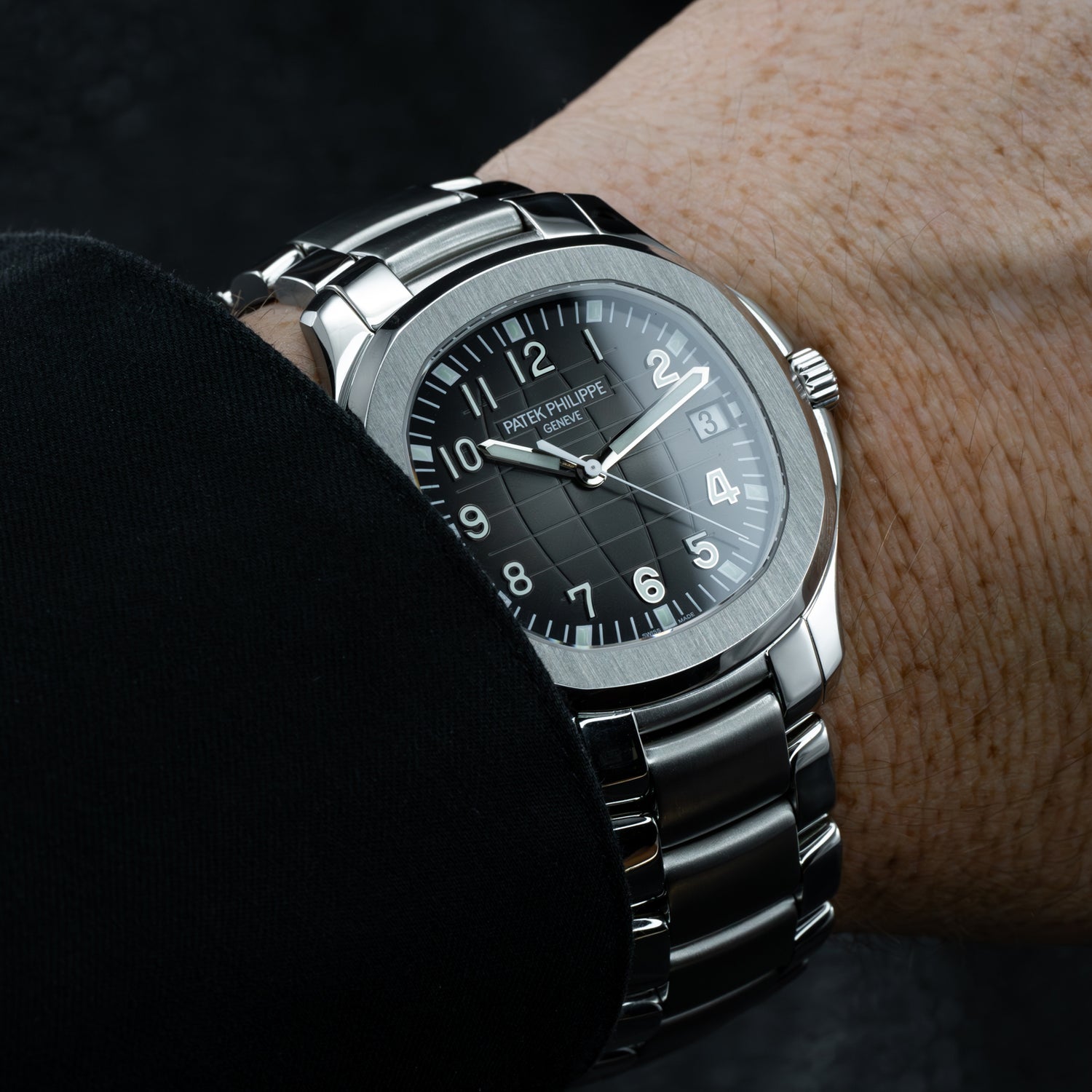

Breitling built its reputation on chronographs for pilots who needed genuine flight calculations built directly into the watch, and the Navitimer's slide-rule bezel remains one of the most functionally distinctive pieces of watch design in the industry. This guide walks through what Navitimer, Chronomat, Superocean, and Avenger actually look and feel like, what the in-house B01 movement means for you, and what to check before buying pre-owned.
Breitling has one of the clearest, most legible engineering-to-audience stories in watchmaking. Everything about the brand's most important references traces back to aviation professionals who needed the watch to do actual math on their wrist, and that functional origin still shapes how the current lineup reads on a wrist today, six lines built around a genuine reason to exist rather than filling out a catalog for its own sake. This Breitling buyer's guide walks through each one on its own terms.
What's in this guide
- Where Breitling's aviation identity actually comes from
- Navitimer
- Chronomat
- Superocean
- Avenger
- Premier
- Top Time
- Materials: what each case actually looks and feels like
- Bracelets and straps
- The B01 movement, and what "in-house" actually changed
- Dial and size variety worth knowing
- What each function actually does, day to day
- Notable references and collaborations worth knowing
- A quick note on reference numbers
- How to choose between Navitimer, Chronomat, Superocean, and Avenger
- How Breitling compares to Omega and IWC on value
- What to check before buying pre-owned
- Price and value: what actually holds
- Where KROLUX fits in
Where Breitling's aviation identity actually comes from
Breitling introduced the Navitimer in 1952 with a circular slide-rule bezel that let pilots calculate fuel consumption, airspeed, climb rates, and unit conversions directly on the watch, all before handheld calculators existed, a genuinely novel piece of engineering that turned a wristwatch into a functional flight-planning tool. The Aircraft Owners and Pilots Association adopted it as an official accessory, about as strong a functional endorsement as a tool watch can earn. That slide-rule bezel remains the Navitimer's defining feature today, largely unchanged in function across more than seventy years, a testament to how completely the original engineering solved the problem it was built for.
That aviation-instrument identity runs through the whole brand, even the lines that have nothing to do with flying. Breitling built its name solving specific calculation and legibility problems for professionals who genuinely needed the answer, and that problem-solving instinct is the actual throughline connecting a slide-rule bezel, a dive watch, and a rugged tool piece that otherwise look like separate design languages.
It also explains a positioning quirk worth understanding before you shop. Breitling spent decades as the semi-official watch of working aviators and airlines, supplying cockpit clocks and crew watches alongside its consumer line, which gives the brand a genuine professional-aviation credibility that a lot of competitors have to manufacture through marketing alone. That credibility shows up in small details across the current catalog, dial legibility choices, bezel actions built to be operated with gloves on, case proportions that trace back to an actual cockpit brief rather than a styling exercise.
Here's what each current line is actually like to wear, with the engineering story behind why it looks the way it does.
Navitimer: the original, still functionally distinct

On the wrist the Navitimer reads busy in a genuinely purposeful way, the slide-rule scale wraps the outer edge of the dial, a three-subdial chronograph layout fills the center, and the whole face carries genuine visual density most modern watches avoid. That density is the point, every marking on the dial does actual work for a pilot who knows how to read it. Modern Navitimer references keep the slide-rule intact while updating case proportions and dial colors well beyond the original steel-and-black formula, and case sizes now span a genuinely wide range, from more compact 38mm executions up through larger 46mm chronograph cases for buyers who want maximum wrist presence alongside the complication. We've individually sourced two Navitimer pieces, an automatic 41mm in green dial and a chronograph in copper dial.

Chronomat: the integrated-bracelet sports chronograph
Originally developed in the 1980s for the Italian Frecce Tricolori air demonstration team and relaunched in its modern form in 2020, the Chronomat is Breitling's answer to the integrated-bracelet steel sports watch, a category most major Swiss brands now compete in. The signature rider tabs, raised markers along the bezel originally designed to let a pilot adjust the bezel with gloved hands, remain the line's clearest visual signature. On the wrist it reads substantial and athletic, closer to a dedicated sports watch than the Navitimer's instrument-panel density, and it competes directly with the integrated-bracelet steel sports watches other major Swiss houses have built their own flagship sport lines around. Case sizes run large by design, this is a watch built to be seen and felt on the wrist, a genuine statement piece. This one isn't among the pieces we've sourced yet, reach out and we'll help you source one.
Superocean: the dive line
Breitling's dedicated dive watch family, built around genuine depth ratings, a unidirectional bezel, and the legibility standards you'd expect from a brand whose whole identity is built on instruments professionals actually rely on. It wears technical and purposeful on the wrist, cleaner and less busy than the Navitimer, since a dive watch's dial has a different job than a slide rule does. Superocean references span from compact, everyday-wearable cases up through genuinely oversized professional variants built for serious depth, the Superocean Automatic sits on the more accessible end of that range while the Superocean 44 and larger references push toward dedicated dive-tool territory. Colorways lean bright and legible, oranges and blues that read clearly against dark water, a deliberate departure from the Navitimer's more restrained palette. This one isn't among the pieces we've sourced yet, reach out and we'll help you source one.
Avenger: the rugged, oversized tool line
The Avenger leans into maximum wrist presence, larger cases, bolder dials, and a more overtly aggressive design language than the rest of the catalog. It's built for a buyer who wants a Breitling that reads unmistakably tool-watch from across a room, with genuine shock and water resistance behind the size rather than case dimensions chosen purely for visual impact. Several Avenger references add a GMT function for buyers who travel regularly, and the line's automatic movements run the same B01-family engineering as the rest of Breitling's serious catalog. This one isn't among the pieces we've sourced yet, reach out if an Avenger is what you're after.
Premier: the dressier, quieter option
The Premier line moves away from tool-watch styling toward a more restrained, classically proportioned case, still carrying Breitling's chronograph engineering underneath but without the busier dial layouts the Navitimer and Chronomat both lean into. It wears smoother and more formal on the wrist, the Breitling for a buyer who wants the brand's build quality without a dial that announces itself. Select Premier references add a moonphase complication, a genuinely dressy touch that shows up almost nowhere else in the current Breitling lineup outside the far more complex Navitimer perpetual calendar. This one isn't among the pieces we've sourced yet, reach out and we'll help you source one.
Top Time: the compact vintage-inspired chronograph
A smaller, more vintage-proportioned chronograph line drawing on Breitling's own 1960s Top Time references, including a run of colorway collaborations that lean directly into that era's design language. It wears noticeably smaller and lighter than the rest of the catalog, worth knowing about specifically if the Navitimer or Chronomat's case sizes read too large for your wrist, and the retro color palettes give it a genuinely different character than the rest of the current lineup. This one isn't among the pieces we've sourced yet, reach out if a Top Time is what you're after.
Materials: what each case actually looks and feels like
Stainless steel: the default across most of the catalog, cool grey-white, durable, the daily-wear choice on Navitimer, Chronomat, and Superocean references.
Titanium: appears across select Avenger and Superocean references, noticeably lighter than steel at the same case size, with a darker, more matte grey tone suited to the tool-watch intent underneath it. It's the material of choice for the largest Avenger cases specifically, keeping an oversized watch wearable rather than punishing on the wrist.
Rose and yellow gold: offered across select Navitimer and Premier references, warming the dial's overall read considerably and pushing those pieces toward a more formal, occasion-driven category than their steel counterparts.
Two-tone (steel and gold): a recurring option across Navitimer specifically, splitting the case and bracelet between steel and gold for a warmer look without the full cost and formality of a solid gold case.
Bronze: shows up periodically on limited references across the catalog, developing its own patina over years of wear, a material collectors actively seek out for that changing character rather than avoid.
Ceramic: used on select Avenger and Superocean bezels specifically, matte and scratch-resistant in a way polished metal isn't, and a common choice on the more tactical-leaning references within each line.
Bracelets and straps
Navitimer references traditionally run on leather straps, reinforcing the instrument-panel read of the dial, though steel bracelet options exist across many modern references for buyers who want a more substantial daily-wear setup. Chronomat and Avenger both run on integrated or semi-integrated steel bracelets built for genuine daily and active wear, with the Chronomat's rider-tab-adorned bracelet reading as part of the case's overall design language rather than a separate component. Superocean references typically pair a rubber or steel bracelet option, both built to handle actual water exposure without degrading. Premier leans toward leather straps to match its dressier intent, with select references offering a steel bracelet for buyers who want more daily versatility.
The B01 movement, and what "in-house" actually changed
This shift is fairly recent in Breitling's history and worth understanding before you buy. Breitling historically relied on outsourced movements, largely from ETA, across most of its production history, a completely standard practice across the Swiss industry at the time. Starting in the mid-2000s, Breitling developed its own manufacture calibers, the B01 chronograph movement launching in 2009 chief among them, and has expanded in-house production across most of its serious references since.
The B01 is a column-wheel chronograph movement, the same architecture watchmakers generally consider more refined than a cam-actuated chronograph, built entirely by Breitling rather than sourced externally. A column-wheel mechanism controls the chronograph's start, stop, and reset functions through a single rotating component rather than a stack of separate levers, which tends to produce a smoother pusher feel and fewer long-term wear issues than the simpler cam-based alternative. That shift meaningfully changed how the brand gets talked about among collectors, similar territory to Tudor's own transition around the same period. In practice, what it means for you as a buyer is that a modern B01-equipped reference carries genuine manufacture-level engineering, while an older or more accessible reference may still run a conventional outsourced movement, worth confirming specifically if in-house engineering matters to your purchase.
Breitling has since expanded the manufacture family beyond the B01, smaller-diameter variants and specialized calibers now cover most of the current lineup, including references that don't need a full chronograph movement. The brand's in-house engineering genuinely spans the catalog at this point rather than sitting inside one flagship caliber, part of why Breitling's reputation among serious collectors has shifted so much over the past fifteen years.
Dial and size variety worth knowing
Navitimer dials carry the most visual density in the catalog by design, the slide-rule scale plus a full chronograph layout, with color variation across black, blue, green, and copper doing most of the personality work on top of that shared structure. Chronomat and Avenger dials run cleaner, bolder markers and simpler layouts built for at-a-glance legibility during active wear. Superocean dials stay closest to a traditional dive-watch formula, high-contrast markers against a dark dial. Case sizes run large across most of the catalog by design, Avenger specifically pushes toward the biggest end of the range, so buyers with smaller wrists should try a specific reference on before assuming it will sit comfortably. Top Time sits at the opposite end of that spectrum, and Navitimer's own size range is wide enough that trying more than one reference before deciding is genuinely worthwhile.
What each function actually does, day to day
Breitling's complications tend to serve a specific professional problem rather than existing purely for visual interest. Here's what you'll actually encounter.
Slide-rule bezel (Navitimer): a circular calculator built into the rotating outer bezel, aligning numbers on the fixed and rotating scales lets you compute fuel consumption, speed, distance, and unit conversions without a separate device. Most owners today use it more as a design signature than a working tool, but the function is fully intact and genuinely usable.
Chronograph (Navitimer, Chronomat, Premier, select Superocean): press the pusher and it starts timing, a stopwatch layered onto the time display, useful for anything from a flight leg to a meeting.
Unidirectional dive bezel (Superocean): rotates one direction only, so a diver tracking elapsed air time can only ever underestimate what's left, never overestimate it.
Rider tabs (Chronomat): the raised markers along the bezel, originally designed so a pilot wearing thick gloves could grip and rotate the bezel without needing bare fingers, now a purely visual signature but a genuinely functional design origin.
GMT hand (select Avenger and Chronomat references): an extra hand making one full rotation every 24 hours, read against a fixed bezel or dial marking to show a second time zone at a glance, useful the moment you land somewhere new.
Moonphase (select Premier references): a rotating disc showing the moon's current phase through a dial aperture, a traditional dress-watch complication that adds visual interest without any real-world timing use for most owners.
Sizing: how a Breitling actually wears
Case size varies more across the Breitling catalog than across most single brands, because each line was built around a different job with different size requirements. Navitimer's slide-rule bezel needs real dial real estate to stay legible, which pushes most references toward 41mm and up, though smaller executions exist for buyers who want the complication without the bulk. Avenger runs largest by design, a genuinely oversized presence built for maximum wrist impact. Top Time sits at the compact end of the range, closer to a vintage-proportioned dress chronograph than a modern tool watch. As a general rule, try a specific reference on before deciding, a case that reads huge in a product photo sometimes wears more reasonably in person, and vice versa.
Notable references and collaborations worth knowing
Breitling has leaned into partnership references more than most brands in this guide series, and a few are worth knowing on sight. Squad and aviation-branded collaborations show up periodically across the Navitimer and Chronomat lines, tied to real aviation heritage partnerships rather than purely commercial tie-ins. Top Time colorway collaborations draw directly on Breitling's own 1960s archive, giving specific references a genuinely different visual identity than the standard catalog. Vintage Navitimer references from before the B01 era carry their own dedicated collector interest, distinct from the modern manufacture-caliber pieces, worth understanding as a separate category rather than an inferior version of the current lineup.
A quick note on reference numbers
Breitling reference numbers combine a letter prefix with a numeric code that encodes the specific model, case material, and movement. Two watches both casually called "the Navitimer" can be genuinely different references once you check the actual number, confirm it directly before assuming two listings describe the same piece, dial color, case size, and movement generation can all shift under the same nickname. The prefix alone won't tell you which sub-family a piece belongs to, so cross-check the full reference against Breitling's own model documentation rather than guessing from the number pattern.
Navitimer vs Chronomat vs Superocean vs Avenger: how do you actually choose?
Start with what story you want the watch to tell. If aviation history and a genuinely functional complication are the draw, the Navitimer is the answer, and it remains the reference most directly tied to Breitling's actual founding identity. If you want a modern integrated-bracelet sports watch with genuine daily versatility, the Chronomat is the pick.
The Superocean makes sense once you actually want or need a dedicated dive tool with Breitling's build quality and legibility standards behind it. The Avenger makes sense once maximum wrist presence and a bolder, more aggressive read matter more to you than the Navitimer's instrument-panel detail. The Premier and Top Time both suit a buyer who wants Breitling's engineering in a smaller or quieter package than the flagship lines offer, Premier for a dressier occasion, Top Time for a lighter, more vintage-toned daily piece.
How does Breitling compare to Omega and IWC on value?
Breitling sits in similar territory to both, genuine engineering substance and distinctive design without Rolex's resale liquidity. Where Breitling stands apart is the specific functional history of the Navitimer's slide-rule bezel, one of the more legitimately useful complications any brand has put on a wrist, aviation math aside. Against IWC specifically, the two brands share a similar aviation-heritage foundation, IWC's Pilot's Watch line and Breitling's Navitimer both trace to genuine cockpit use, though Breitling's slide-rule function is a more distinctive, hands-on complication than IWC's legibility-first approach. Against Omega, the comparison runs closer to even, both brands trade Rolex's resale liquidity for a real engineering or functional story, and the choice between them usually comes down to which specific narrative, space exploration or aviation math, actually resonates with the buyer.
What should you check before buying a pre-owned Breitling?
Confirm whether the specific reference carries an in-house B01 caliber or an older outsourced movement, since that distinction affects both mechanical substance and resale expectations. Check that the slide-rule bezel, on any Navitimer, actually rotates smoothly and the markings remain legible, wear can affect function on this specific complication more than on a standard rotating dive bezel. Confirm box, papers, and service history the same as you would with any serious purchase, incomplete documentation costs real money at resale on any brand, Breitling included.
On a Chronomat or Avenger specifically, inspect the bracelet's rider tabs and links closely, these raised details show wear differently than a plain link and can indicate how carefully a previous owner handled the piece. On a Top Time or any bronze reference, ask about patina history the same way you would on a bronze Panerai or IWC, an aggressively polished case has lost part of what made the piece desirable in the first place. For the full pre-owned checklist that applies across any brand, here's the complete buying guide. And if you're weighing Breitling against IWC's own aviation lineup, the complete IWC buyer's guide covers that comparison from the other side.
Price and value: what actually holds
Real talk. Breitling's value proposition is genuine functional history and increasingly serious in-house engineering rather than speculative resale premium, and buyers expecting Rolex-style appreciation on a Navitimer or Chronomat are shopping with the wrong expectations going in. Vintage Navitimer references, particularly early examples with original slide-rule bezels in excellent condition, have held meaningful collector interest, while most modern production tracks closer to the brand's own retail positioning over time. Condition on that specific bezel matters more to value than almost any other single detail on a vintage piece, since it's both the functional heart of the watch and the component most likely to show real wear from decades of actual use.
Most current Breitling pieces will hold a reasonable percentage of their value if you buy smart and take care of them, a perfectly good outcome for a watch you're actually going to wear rather than store. Discontinued colorways and limited-run Top Time and Navitimer references tend to draw the strongest collector interest within the current catalog, largely because both offer something visually distinct that's genuinely hard to find once production ends. Buy a Breitling because the aviation story and the specific line's identity genuinely appeal to you, and treat any resale strength as a bonus on top of that. A well-documented, well-cared-for piece from any line in the current catalog is a genuinely sound purchase regardless of where the broader market moves.
Where does KROLUX actually fit into buying a Breitling?
Every piece we source gets authenticated before it's ever offered to a client, and we're genuinely selective about what we take on in the first place. Breitling's growing reputation among serious collectors means demand on specific references has picked up meaningfully over the past few years, worth working with a dealer who tracks the market closely rather than quoting last decade's numbers. We've individually sourced two Navitimer pieces, an automatic 41mm green dial and a chronograph in copper dial, and for anything else in the current lineup, including Chronomat, Superocean, Avenger, Premier, or Top Time references, reach out and we'll help you source the right one. We don't primarily deal in vintage, but it never hurts to ask if a specific vintage reference is what you're chasing. That's the whole point of this Breitling buyer's guide: know the engineering story before you buy into it, then come to us for the piece itself.