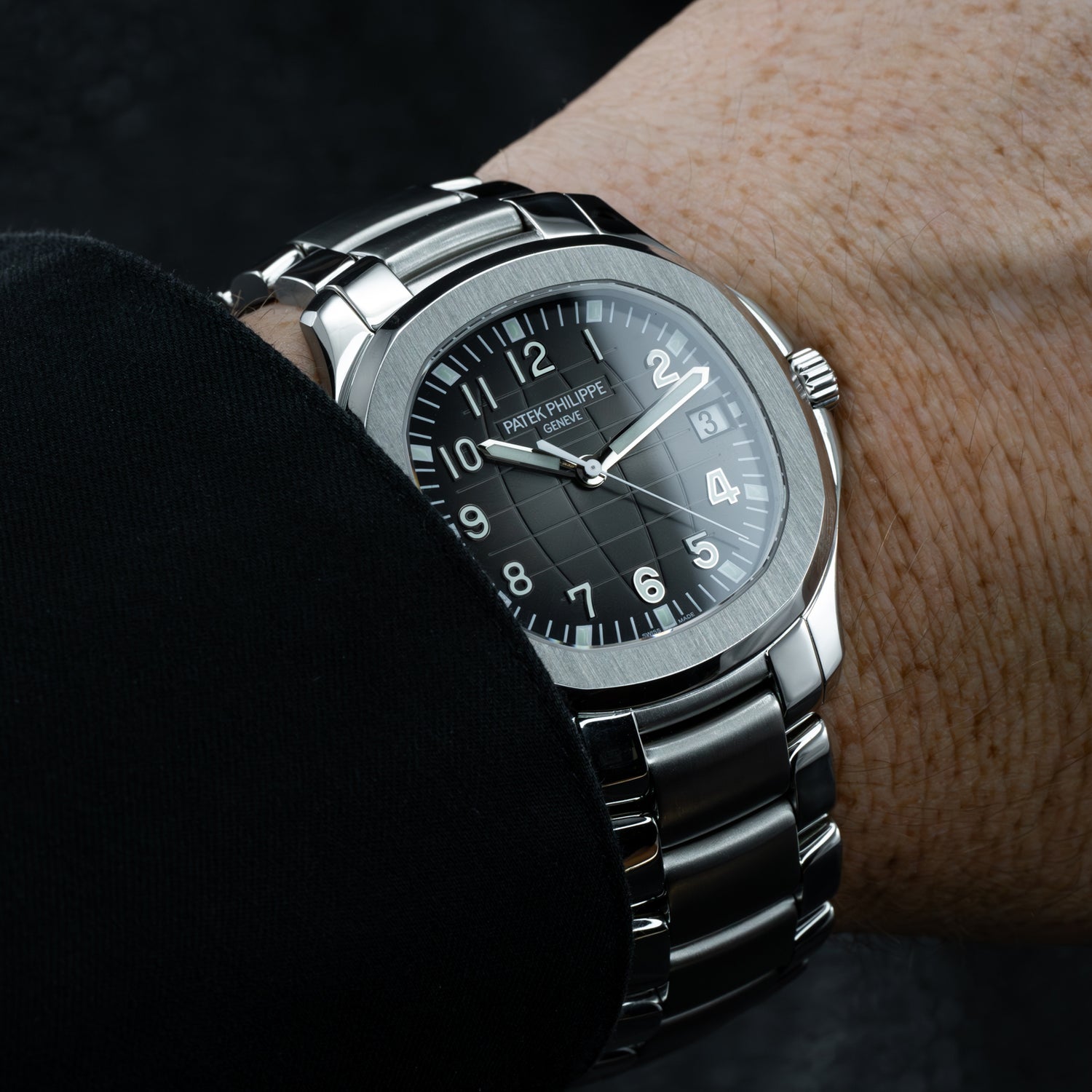

Tudor was created by Rolex's own founder specifically to offer Rolex-adjacent case and bracelet quality at a lower price, and for decades that was the entire pitch. Since rolling out genuine in-house movements starting in 2015, Tudor's built its own identity, its own following, and its own reasons to buy one instead of treating it as a Rolex consolation prize. This guide walks through what every current Black Bay reference, Pelagos, Ranger, and the 1926 line actually look and feel like, what the in-house movement shift really means, and what to check before buying pre-owned.
Tudor has an unusual origin story in watchmaking. Most brands spend decades trying to build a connection to a bigger name. Tudor started with one, on purpose, by design, and has spent the last ten-plus years proving it doesn't need it anymore.
Eight collections matter for most buyers today, four inside the core Black Bay family and four standing on their own, and each one is built for a genuinely different job rather than being a size or color variant of the same idea. That's what this Tudor buyer's guide sorts out family by family: here's what each one actually looks and feels like, what changed with the movement, and where a real dividing line sits between an older Tudor and a current one.
What's in this guide
- Black Bay: the core dive-watch family
- Pelagos: the dedicated tool-diver family
- Ranger
- 1926
- Materials: what Tudor actually builds with
- Bracelets and straps
- The in-house MT5 movement, and why the ETA years still matter
- Dial and size variety worth knowing
- What each function actually does, day to day
- A quick note on reference numbers
- How to choose between the Black Bay family, Pelagos, Ranger, and 1926
- Tudor vs Rolex: same factory roots, really different watches
- What to check before buying pre-owned
- Price and value: what actually holds
- Where KROLUX fits in
Hans Wilsdorf, Rolex's founder, registered "The Tudor" trademark in 1926 and formally launched Montres TUDOR S.A. in 1946, specifically to offer the case quality and reliability Rolex was known for, at a price more people could reach. For decades that meant Tudor cases came from the same manufacturing partners as Rolex while the movements underneath were sourced from ETA and other Swiss suppliers. Same shell, different heart. That's not the story anymore, and here's what each current family is actually like to wear.
Black Bay: Tudor's core dive-watch family
Four references matter here, each built for a genuinely different job even though they all share the Black Bay name and the vintage dive-watch silhouette it's known for.
Black Bay 58: the one most collectors point to first
Named for 1958, the year of the vintage reference 7924 it draws its proportions from, the Black Bay 58 wears smaller and more comfortably than the rest of the Black Bay range, a 39mm case that sits closer to a vintage dive watch than a modern one. It's built around the in-house MT5402 movement and has become something close to a modern classic in its own right, the reference most people mean when they say "just get a Black Bay" without qualifying it further. It's the reference most new collectors are pointed toward when they ask a dealer where to start with Tudor, and once you put one on the wrist next to a standard Black Bay, the size difference explains why on its own. This one isn't among the pieces we've sourced yet, but it's one of our most common requests, reach out and we'll help you track one down.
Black Bay 41 (classic Black Bay): the flagship dive silhouette

This is the reference that started the whole rebuild, a vintage-inspired dive silhouette that draws directly from Tudor's own military dive-watch heritage, including references supplied to the French Navy in the 1970s that collectors now nickname the "Snowflake" for the distinctive squared hour hand still used across the line today. The steel-and-gold diamond-bezel piece we've sourced shows how far the family stretches beyond a plain tool watch, the same dive-watch bones dressed up with precious metal and stones without losing the silhouette that made the line famous. Standard steel Black Bay references run a broader range of dial colors than almost anything else in Tudor's catalog.
Black Bay Pro: the travel watch
Tudor's answer to the everyday GMT, a fixed black bezel with a bright orange 24-hour hand for a second time zone, snowflake hands carried over from the core Black Bay line, and a case built around actually using the function daily rather than as a design flourish. It reads more technical and purposeful on the wrist than the standard Black Bay, closer in spirit to a pilot's tool than a dress-adjacent dive watch. This one isn't among the pieces we've sourced yet, but reach out and we'll help you source one.
Black Bay Chrono: the chronograph

The Black Bay Chrono brings a genuine stopwatch function into the dive-watch silhouette, a three-subdial layout on top of the same vintage-inspired case language as the rest of the line. Dial and accent color do enormous work here, from restrained panda-style black and white combinations to the turquoise and pink "Flamingo" colorway we've sourced, which reads playful and confident rather than trying too hard. Underneath, it runs the in-house MT5813 movement, developed jointly with Breitling as part of the 2017 manufacturing partnership between the two brands and sharing its architecture with Breitling's own B01 caliber, a genuinely significant detail for a Tudor chronograph and worth knowing before you assume it's a simple third-party module. We've individually sourced two Black Bay Chrono pieces, the Flamingo turquoise and a pink dial execution.
Pelagos: the dedicated tool-diver family
Two references make up the Pelagos line, the standard dive tool and the French Navy-developed FXD, both built with no vintage pretense at all and both built to actually be used for the diving they're rated for, real dive-tool territory rather than a look borrowed for the wrist.
Pelagos: the everyday technical diver
Where the Black Bay line borrows a vintage silhouette, the Pelagos is Tudor's modern, purpose-built dive tool. Titanium case, matte finish, rated to 500 meters, a depth figure built for actual professional and technical diving rather than pool laps, and a self-adjusting bracelet clasp that compensates for a wetsuit sleeve or a wrist that swells slightly with temperature. It's built around the in-house MT5612 movement and wears noticeably lighter than a steel watch of the same size thanks to the titanium case. The Black Bay is the watch you'd wear to dinner and could technically dive in. The Pelagos is built for someone who's actually going to use every meter of that rating. This one isn't among the pieces we've sourced yet, reach out and we'll help you source one.
Pelagos FXD: developed alongside the French Navy
The most purpose-built watch in Tudor's current lineup. Developed in collaboration with the French Navy's combat swimmers, the Pelagos FXD drops the traditional bracelet and spring-bar system entirely in favor of fixed strap bars and a single-piece fabric strap, exactly the kind of setup a military diver actually wants, nothing to work loose, nothing extra to manage underwater. Most buyers will never need it in a strict functional sense, but it's a genuine, uncompromised tool piece for the collector who wants Tudor's most mission-specific reference rather than its most versatile one. Reach out if this is the piece you're chasing.
Ranger: the field watch
Relaunched in 2022 after decades away from the catalog, the Ranger draws on vintage Tudor Ranger references from the 1960s and '70s that were originally built for expedition use. It strips the dive-watch elements out entirely, no rotating bezel, no date window, just a clean three-hand field-watch layout built for legibility over anything decorative. At 39mm and built around the same MT5402 movement family as the Black Bay 58, it wears light and understated, the Tudor for a buyer who wants the in-house engineering without any dive-watch visual language at all. Reach out if a Ranger is what you're after.
1926: the dress line named for where Tudor actually began
The collection that most directly honors the brand's real starting point, the 1926 trademark registration rather than the 1946 formal launch. It moves away from tool-watch styling entirely, fluted bezel options, a genuinely dressy case profile, and a price point built to be an accessible entry into the brand for a buyer who wants nothing to do with dive watches. It's the clearest signal yet that Tudor sees itself as more than "the sport-watch alternative to Rolex." It's a genuinely different Tudor than the one most collectors picture, and worth a look if the Black Bay's tool-watch language has never been the draw for you in the first place. Reach out if you're chasing a 1926 reference.
Materials: what Tudor actually builds with
Tudor's material story is simpler than Rolex's or Omega's, and that's just part of what the brand actually is. Stainless steel is the default across nearly the entire catalog, cool grey-white, durable, built for daily wear without a second thought. Titanium shows up specifically on the Pelagos line, noticeably lighter than steel at the same case size, with a darker, more matte grey tone suited to the tool-watch intent underneath it. 18k yellow gold appears as an accent material on select Black Bay references, most often paired with steel rather than used for a full solid-gold case, the diamond-bezel piece we've sourced is a good example of how far that pairing can be dressed up. Tudor doesn't chase the wide precious-metal range Rolex offers, and buyers looking specifically for a full gold-cased piece will find a much shorter list here than at Rolex or even Omega. That restraint is deliberate rather than a limitation, Tudor's identity has always been built around case quality and mechanical substance first, precious metal second, and the catalog reflects that priority.
Bracelets and straps
Black Bay references typically run on a riveted-look steel bracelet that echoes the vintage military pieces the line draws from, sturdy and a little more textured than a plain brushed bracelet, alongside leather and fabric strap options depending on the specific reference. The Pelagos uses its own dedicated titanium bracelet with the self-adjusting clasp mentioned above, purpose-built rather than shared across the catalog. The Pelagos FXD breaks from bracelets entirely, fixed strap bars and a single-piece fabric strap only, no bracelet option exists for that reference by design. The Ranger and 1926 lean toward simpler leather or fabric strap presentations that match their respective field-watch and dress-watch intentions. Across nearly every reference, Tudor makes swapping between bracelet and strap straightforward with a quick-change spring bar system, so the same watch can go from a boardroom look to a weekend look without a trip to a jeweler, the Pelagos FXD being the one deliberate exception given its fixed-bar design.
The in-house MT5 movement, and why the ETA years still matter
This is the single biggest shift in Tudor's story, and it's worth understanding in plain terms. For most of Tudor's history, the watches ran on movements sourced from ETA and other Swiss suppliers rather than built in-house, a completely standard practice across the Swiss watch industry at the time, and a legitimate approach in its own right rather than a shortcut. It meant Tudor could offer Rolex-adjacent case quality at a meaningfully lower price, since it wasn't absorbing the cost of developing its own movements.
That changed starting in 2015, when Tudor introduced its first in-house manufacture movement, the MT5621, inside the North Flag. The Black Bay line got its own dedicated in-house caliber, the MT5602, the following year. Since then Tudor has rolled genuine in-house calibers across most of its serious sports watch range, the MT5402 in the Black Bay 58 and Ranger, the MT5612 in Pelagos, the MT5652 in Black Bay Pro, and the MT5813 in Black Bay Chrono, developed jointly with Breitling and sharing its architecture with Breitling's B01 caliber. In-house means Tudor designs, builds, and regulates the movement itself rather than buying a finished caliber from an outside supplier, which in practice translates to tighter quality control and a more distinct mechanical identity for the brand. That single shift is why Tudor gets talked about completely differently today than it did fifteen years ago, and it's the actual dividing line to know when you're looking at a pre-owned piece: is this an older ETA-based watch, or one of the newer in-house references. Neither answer should scare you off on its own, an ETA-based Tudor from before 2015 is a well-built, fairly-priced piece of watchmaking history in its own right, just a different generation of the brand with a different set of trade-offs than what you're buying today.
Dial and size variety worth knowing
The Black Bay family carries the most dial variety in Tudor's catalog by a wide margin, blues, blacks, burgundy, and the playful colorway pairings the Chrono line leans into. Case sizes range from the Black Bay 58's compact 39mm up through the standard Black Bay's larger case and the Pelagos's sport-diver proportions, so the same general Black Bay silhouette can genuinely wear very differently depending on which specific reference you choose. The Ranger and 1926 dial layouts stay deliberately simple by comparison, legibility and restraint over variety, in keeping with what each line is actually built to do.
What each function actually does, day to day
Tudor's lineup doesn't stack complications the way a Sky-Dweller or a Daytona does, and that restraint is part of the brand's identity, everything on the dial earns its place. Here's what the functions you'll actually run into do in practice.
Unidirectional dive bezel (Black Bay, Pelagos, Pelagos FXD): rotates one direction only, so a diver tracking elapsed air time can only ever underestimate what's left, never overestimate it. Line up the marker with the minute hand at the start of a dive and the bezel does the rest of the math for you.
GMT hand and fixed 24-hour bezel (Black Bay Pro): the extra hand makes one full rotation every 24 hours instead of 12, and reading it against the fixed bezel tells you a second time zone at a glance, without touching the local time or doing math in your head. Useful the moment you land somewhere new or need to know what time it is back home without checking your phone.
Chronograph (Black Bay Chrono): press the pusher and it starts timing, a stopwatch built into the watch. Press again to stop, a third press resets it. It's a genuine stopwatch function layered onto the time display, useful for timing anything from a race to a phone call.
Self-adjusting bracelet clasp (Pelagos): a small spring-loaded mechanism inside the clasp that expands slightly to compensate for a wetsuit sleeve or a wrist that swells a little with temperature or activity, so the fit stays snug without needing to manually add or remove links. It's a genuinely practical feature, the kind built by someone who's actually worn a dive watch on an actual dive.
A quick note on reference numbers
Tudor reference numbers are shorter and less standardized-looking than Rolex's, but they still encode real information, case material, dial color, and bracelet or strap configuration among them. Two watches both casually called "Black Bay" can be meaningfully different pieces once you check the actual reference, confirm it directly rather than relying on the nickname alone before assuming two listings are interchangeable.
How to choose between the Black Bay family, Pelagos, Ranger, and 1926
Start with what you actually want the watch to do. If you want the single most recognizable modern Tudor, the reference collectors talk about first, the Black Bay 58 is the answer, and it wears comfortably enough to be a genuine daily piece. If you want the same dive-watch DNA with more dial variety and a slightly larger presence, the classic Black Bay is the wider net. If you actually dive, or want the most purpose-built tool in the lineup, the Pelagos is the straight-up choice, and the Pelagos FXD is the answer only if you specifically want Tudor's most uncompromising, least-versatile piece.
The Black Bay Pro makes sense once travel and a second time zone are a real part of your life. The Black Bay Chrono makes sense once you specifically want a stopwatch function inside the Black Bay silhouette. The Ranger is the pick for a buyer who wants Tudor's in-house engineering with zero dive-watch visual language, and the 1926 is the pick for a buyer who wants Tudor without any sport-watch styling at all. If you're torn between two of these, ask yourself whether you'd ever actually use the function you're paying extra for, a GMT hand does nothing for a buyer who doesn't travel, and a dedicated dive tool does nothing for a buyer who never gets in the water. Buy for the life you actually live.
Tudor vs Rolex: same factory roots, really different watches
This comparison is baked into Tudor's own origin story, so it's worth answering directly rather than dancing around it. Rolex still wins decisively on resale liquidity and universal recognition, a steel sport Rolex in a high-demand configuration is about as safe a hold as anything in the watch world, and almost anyone on the street can identify one on sight. Tudor doesn't compete on either of those points, and a good dealer should tell you that plainly rather than talk around it.
What Tudor offers instead is genuine in-house engineering at a significantly lower price point, distinctive design that draws from its own military heritage rather than echoing Rolex's aesthetic, and in the case of the Black Bay 58 and Ranger specifically, sizing that a lot of collectors actually prefer to wear day to day. Think of it as buying a different watch from a company that happens to share Rolex's manufacturing standards for cases and bracelets, with its own movements and its own design language underneath, rather than a discounted version of something else. For a lot of collectors, that's exactly the appeal.
What should you check before buying a pre-owned Tudor?
Confirm whether the specific reference carries an in-house MT5 movement or an older ETA-sourced caliber, since both exist across the catalog and that distinction meaningfully affects both the ownership experience and the resale value. Check that box, papers, and service history are all present and match the reference, the same as you would with any serious purchase. If the piece is a genuine vintage reference from before the 2015 in-house shift, understand you're buying a different generation of the brand entirely, with its own distinct collector appeal rather than a lesser version of a modern piece.
On any Black Bay reference specifically, check the bezel action and the condition of the snowflake hands' lume, both are original-feel details that show wear differently than the case or dial. On a Pelagos, actually test the self-adjusting clasp mechanism before buying, it should expand and contract smoothly, any stiffness is worth asking a watchmaker about before you close the deal. And on a Pelagos FXD, remember there's no bracelet to fall back on, confirm the strap and fixed bars are original and undamaged, since replacing them isn't as simple as swapping a standard bracelet.
For the full pre-owned checklist that applies across any brand, here's the complete buying guide. And for a family-by-family look at how Tudor's biggest reference point compares, the Omega buyer's guide is worth reading alongside this one if you're weighing options across brands rather than just within Tudor.
Price and value: what actually holds
Tudor doesn't hold value quite the way Rolex does, and it's worth being straight about that rather than overselling it. Rolex still wins decisively on resale liquidity. What Tudor offers instead is genuine in-house engineering, its own distinctive design language, and a significantly lower entry price for a comparable level of build quality. Certain Black Bay references have held their value well on the secondary market, particularly the 58, but Tudor as a brand doesn't carry the same speculative premium Rolex sport steel does, and shouldn't be bought expecting it to.
For a lot of collectors, that trade makes complete sense entirely on its own terms, more watch and more character for the dollar, a genuine story behind the engineering, and a lower bar to clear on the first serious luxury watch purchase. Discontinued or limited colorways within the Black Bay family tend to hold their value best, the same pattern that plays out across most of the industry, while the standard ongoing production references are priced to be worn rather than speculated on. Buy it because you want to wear it, and let any appreciation be a pleasant surprise rather than the plan.
Where does KROLUX actually fit into buying a Tudor?
Every piece we source gets authenticated before it's ever offered to a client, and we're selective about what we take on in the first place. That matters as much with Tudor as it does with Rolex, the brand's rebuilt reputation over the last decade has made certain references genuinely desirable, and desirability attracts exactly the kind of sellers worth being careful around. We've individually sourced several Black Bay pieces, from a diamond-bezel steel-and-gold reference to two Black Bay Chronos, and for anything else in the current lineup, including the Black Bay 58, Pelagos, Pelagos FXD, Ranger, or 1926, reach out and we'll help you source the right one. That's the whole point of this Tudor buyer's guide: know the family before you buy into it, then come to us for the piece itself.