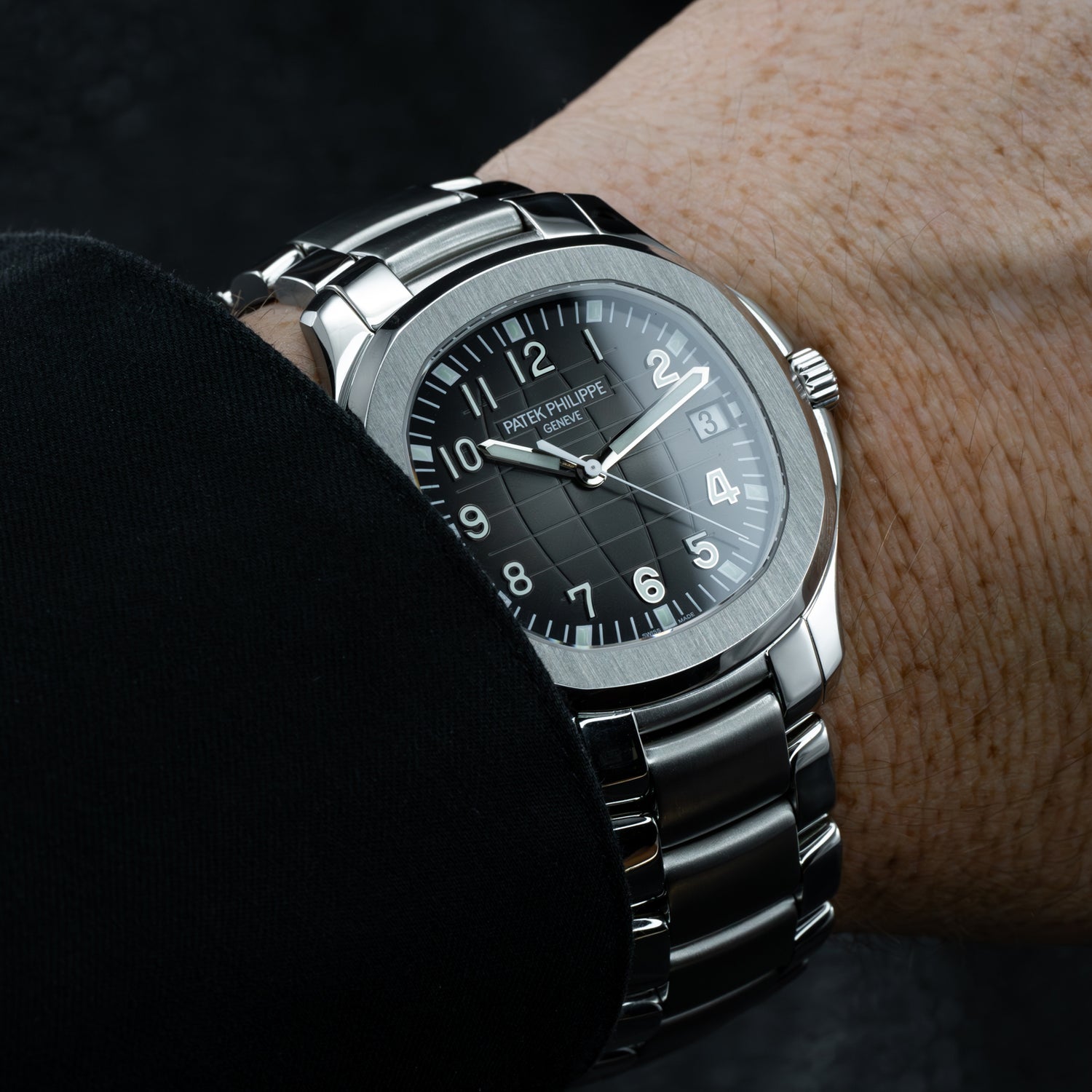

Both are integrated-bracelet luxury sports watches from historic Swiss manufactures, and the comparison usually comes down to recognition versus access. The Royal Oak carries far more waitlist pressure and cultural recognition. The Overseas delivers comparable manufacturing pedigree with meaningfully easier access. Both are the right answer for the collector they're built for.
This comparison comes up constantly among collectors who've already decided they want an integrated-bracelet luxury sports watch and are trying to figure out which manufacture to buy from.

What do the Royal Oak and Overseas have in common?
Both are steel integrated-bracelet sports watches from manufactures with centuries-deep watchmaking pedigree behind them, built to compete in the same broad category as each other and as Patek's Nautilus. Both carry in-house manufacture movements and serious finishing standards throughout.
Both also represent their respective brand's attempt to bring serious watchmaking into a more versatile, daily-wearable sports format, instead of confining that manufacturing pedigree to purely formal dress pieces.

How do they differ?
Recognition. The Royal Oak is one of the most recognized luxury watch silhouettes on earth, instantly identifiable even to people who don't follow watches closely. The Overseas carries real manufacturing weight but far less mainstream recognition, which some collectors treat as a downside and others treat as exactly the appeal.
Access. This is where the two diverge most sharply. The standard steel Royal Oak carries some of the longest waitlists in the entire luxury watch industry. The Overseas, despite comparable engineering and finishing, is meaningfully easier to source, precisely because fewer people are chasing it.
Design language. The Royal Oak's octagonal bezel and exposed screws are instantly recognizable and haven't changed fundamentally since 1972. The Overseas takes its own integrated-bracelet approach with a rounder case and a quick-change bracelet system that lets an owner swap between metal, leather, and rubber without a watchmaker's tools.
Which one holds value better?
The Royal Oak, and it's not close. Waitlist demand this extreme translates directly into resale strength, and steel Royal Oak references consistently command a premium over retail on the secondary market. The Overseas holds value reasonably well but doesn't carry the same speculative premium, largely because it isn't fighting the same allocation scarcity.
Which one should you buy?
Buy the Royal Oak if resale strength and universal recognition matter to you, and you're prepared for real waitlist patience or a secondary-market premium to skip it. Buy the Overseas if you want comparable engineering and finishing without either of those costs, and you're comfortable with a piece serious collectors recognize even though casual observers might not.
For the fuller version of the AP side of this comparison, here's the complete AP buyer's guide.
What should you check before buying either one pre-owned?
Confirm the specific reference and production year for either watch, since both manufactures have made meaningful updates across their respective histories. Check the Overseas's interchangeable bracelet system specifically for wear on the quick-release mechanism, since that's a moving part unique to this reference. And treat box, papers, and service history the same as you would with any serious purchase at this tier.
We deal in both regularly. If you're torn between the two, reach out and we'll talk through which one fits what you're building toward.