
The Royal Oak is what most people picture when they hear Audemars Piguet, and it's a fraction of what the brand actually makes. The Royal Oak Offshore pushes the same design language into bolder, larger territory across a wide range of executions. The Code 11.59 is AP's attempt at a new case shape and its home for the brand's most serious complications. The Jules Audemars line carries the same manufacturing depth in a more classical package most casual buyers never look at. This guide walks through what each actually looks and feels like, what separates them, and what to check before buying pre-owned.
Audemars Piguet has a strange problem for a brand this significant. One reference, the Royal Oak, has become so recognizable that it overshadows a deep catalog most buyers never look past.
What's in this guide
- Why Audemars Piguet carries the weight it does among serious collectors
- Royal Oak
- Royal Oak Offshore
- Code 11.59
- Jules Audemars
- Materials: what each case actually looks and feels like
- Bracelets and straps
- What AP's manufacturing depth actually means for a buyer
- Complications: what AP's manufacture is actually capable of
- Dial and size variety worth knowing
- What each function actually does, day to day
- Sizing: how an Audemars Piguet actually wears
- Notable references worth knowing
- A quick note on reference numbers
- How to choose between Royal Oak, Offshore, Code 11.59, and Jules Audemars
- How Audemars Piguet compares to the rest of the top tier
- What to check before buying pre-owned
- Price and value: what actually holds
- Where KROLUX fits in
Why does Audemars Piguet carry the weight it does among serious collectors?
Jules Louis Audemars and Edward Auguste Piguet founded the manufacture in 1875 in Le Brassus, in the Vallee de Joux, the same valley that produced several of the other manufactures covered elsewhere in this guide series. The two were childhood friends who reconnected as adults and discovered they were both watchmakers, Audemars specializing in complicated ebauche movements, Piguet specializing in movement regulation. That division carried straight into the business itself once they formalized it as Audemars Piguet & Cie in 1881, Audemars overseeing production and the technical side, Piguet handling sales and management.
What makes that origin unusual today is what happened after it. Audemars Piguet has remained in the hands of the founding families and independent ever since, a rarity among manufactures this significant, most of which have long since been absorbed into larger luxury groups. In its early years the manufacture built its reputation on complicated pocket watches, work serious enough to win a medal at the 1889 Paris Exposition. That early complications pedigree is worth knowing, because it's the same manufacturing depth that shows up in the Code 11.59's most serious references today, a direct line from 19th-century pocket-watch engineering to the complications AP builds now.
Here's what each current line is actually like to wear, with the design story behind why it looks the way it does. This Audemars Piguet buyer's guide walks through each on its own terms.
Royal Oak: the reference that created a category

Designed by Gerald Genta and introduced in 1972, the Royal Oak was one of the first luxury sports watches built in steel, an exposed octagonal bezel held in place by eight visible hexagonal screws, paired with an integrated bracelet that flows directly out of the case instead of attaching to it as a separate component. The name traces back to HMS Royal Oak, a recurring name across British Royal Navy vessels, and the bezel's eight exposed screws echo the shape of a ship's porthole. Genta himself has also described drawing on the look of a diver's antique brass helmet for the case silhouette, so the design carries a nautical thread from more than one direction. That combination, steel treated as a luxury material and a sports watch aesthetic applied to a serious manufacture movement underneath, effectively created the category every other integrated-bracelet sports watch has spent decades competing in.
It's the reference every other integrated-bracelet sports watch gets measured against, and for most casual observers it's the only Audemars Piguet reference they could actually name. The Royal Oak Self-winding in blue dial shown above is a piece we've sourced individually, and we've also sourced a Royal Oak Double Balance Wheel Openworked, covered in more depth in the functions section below.
Royal Oak Offshore: the same design language, pushed further

Designer Emmanuel Gueit created the Offshore in 1993 at the request of AP co-CEO Stephen Urquhart, who wanted a bolder, larger Royal Oak that could pull in a younger audience. Reference 25721ST launched at 42mm across roughly 15mm of case thickness, considerably larger and more aggressive than the original 39mm Royal Oak, and it earned the nickname "the Beast" almost immediately. The reception was divisive at first, Genta himself is reported to have confronted AP over the design at its Baselworld launch, arguing it had ruined his original concept. The market disagreed with him decisively, and the Offshore has since become one of the most culturally significant sports watches AP produces, a bolder, more statement-driven sibling to the standard Royal Oak instead of a separate design entirely.
Collectors who want the Royal Oak's core identity but with more wrist presence tend to gravitate toward the Offshore specifically, and it's also where AP has done its most adventurous material and colorway work over the years, since the larger case gives more room to experiment with ceramic, unusual dial textures, and bolder color combinations. We've individually sourced a wide range of Offshore pieces, each one a unique watch instead of ongoing stock: the Black Ceramic Beast Chronograph shown above, a separate steel Chronograph "Beast", a Black Ceramic Chronograph, a Baby Blue 42mm Flyback Chronograph, a rose gold Chronograph known informally as the "Brick" for its dial's textured, tapestry-like pattern, a rose gold "Half Brick" with a gold dial, the Bleu Nuit Nuage 50, a Selfwinding Chronograph in ceramic and rose gold with a grey dial, and two more distinctive executions covered in the notable-references section below, the "Elephant" and "End of Days."
Code 11.59: a distinct case shape, and AP's home for serious complications

The Code 11.59, launched in 2019, represents Audemars Piguet's attempt to build a new identity beyond the Royal Oak: a rounded case with a distinctive stepped bezel and a complex, multi-layered dial construction that reads completely differently up close than the Royal Oak's flat, integrated silhouette. It's also where AP concentrates its most serious complications, drawing directly on the manufacture's 19th-century complicated-pocket-watch heritage. We've individually sourced four Code 11.59 pieces: the Perpetual Calendar in rose gold shown above, a Selfwinding Chronograph in white gold with a burgundy dial, a Starwheel, and a White Gold Flying Tourbillon, each covered in more depth in the complications section below.
Jules Audemars: the classical line named for the brand's own founder

Named directly for co-founder Jules Louis Audemars, this collection represents the brand's classical, round-case identity, the side of AP that existed well before the Royal Oak redefined what the manufacture was known for. AP discontinued Jules Audemars as an active collection in November 2021 to focus the current catalog on Royal Oak, Offshore, and Code 11.59, so every Jules Audemars piece we source is pre-owned only, not available new from AP today. It's the line most likely to surprise a buyer who only knows AP through the Royal Oak and Offshore, restrained proportions, traditional dial layouts, and the same manufacturing depth applied to a different aesthetic. The Jules Audemars Chronograph in 18k rose gold shown above is a piece we've sourced individually.
Materials: what each case actually looks and feels like
Stainless steel: the material that made the Royal Oak's entire concept work in the first place, cool grey-white, durable, and the reason the original 1972 design felt so radical, a luxury watch built from a material nobody had treated as luxury before.
Rose and white gold: offered across Royal Oak, Offshore, Code 11.59, and Jules Audemars references, warming or cooling the case considerably depending on the specific execution, common on the brand's more formal and higher-complication pieces.
Ceramic: a defining Offshore material in particular, deep, consistent black or occasionally colored surfaces that resist scratching in a way polished metal simply can't, part of why the Offshore has become such a natural canvas for AP's more experimental material work.
Across every material, AP's finishing stays consistent with the manufacture's broader reputation, hand-applied polishing and brushing techniques on the Royal Oak's bezel and bracelet links specifically that hold up under close inspection regardless of which case material a given reference uses.
Bracelets and straps
The Royal Oak's integrated bracelet is arguably as important to the design as the case itself, tapered links that flow directly out of the case instead of attaching as a separate component, finished with the same alternating polished-and-brushed treatment as the bezel. Offshore references run on either that same integrated bracelet or a rubber strap depending on the specific execution, the rubber option reinforcing the line's bolder, more athletic character. Code 11.59 and Jules Audemars references lean toward leather straps, reinforcing their more classical, dress-oriented intent, though metal bracelet options exist across select Code 11.59 references. Case construction varies more by family than by any single house style, the Royal Oak and Offshore's integrated-bracelet architecture has essentially nothing in common structurally with the Code 11.59 or Jules Audemars lines' conventional case-and-strap construction.
What AP's manufacturing depth actually means for a buyer
AP builds its own movements in-house, a manufacturing tradition that traces directly back to the complicated pocket watches the original partnership built in the 1880s. That depth shows up differently across the four collections covered here, in the Royal Oak's ultra-thin automatic calibres that let the case stay slim despite the substantial-feeling bracelet, in the Offshore's chronograph movements built to handle a larger, more robust case without sacrificing accuracy, and most visibly in the Code 11.59's complications, where AP's 19th-century pocket-watch engineering heritage shows up most directly in the modern catalog. Because the manufacture builds so much of its own movement architecture in-house, buying an AP means buying directly from a manufacture whose complications pedigree predates the Royal Oak by nearly a century, even though the Royal Oak is what most buyers associate with the brand today.
Complications: what AP's manufacture is actually capable of
The Code 11.59 collection is where AP's complications work concentrates most heavily in the current catalog, and the individual pieces we've sourced happen to cover a wide range of it. The Perpetual Calendar tracks the date, month, and leap-year cycle without needing manual correction for decades at a time, a complication that requires the movement to account for months of varying length entirely mechanically. The Starwheel displays the hour using a set of three rotating discs visible through cutout windows instead of conventional hands, each disc showing a number that lines up with a fixed indicator as the hour changes, a different way of reading the time that draws on AP's own history with unconventional hour displays. The White Gold Flying Tourbillon suspends its tourbillon cage with support from only one side instead of a bridge on both, a visually dramatic execution that also happens to be considerably harder to build reliably, since the cage has less structural support holding it in place. Together, these three references alone represent a level of complicated watchmaking most brands never attempt across their entire catalog, let alone within a single collection.
Dial and size variety worth knowing
Royal Oak dials run the brand's signature "Tapisserie" pattern, a waffle-like textured finish that catches light differently depending on the angle, a detail that photographs rarely capture accurately. Offshore dials build on that same idea with more layered, exaggerated depth, and lean into bolder colorways and textures than the standard Royal Oak typically does. Code 11.59 dials are multi-layered by construction, the stepped bezel and complex dial architecture creating visible depth even on time-only references, and considerably more on the complicated pieces covered above. Jules Audemars dials run classically clean by comparison, applied markers and restrained decoration in keeping with the collection's dress-watch intent. Case sizes vary meaningfully across the catalog too, the standard Royal Oak runs closer to 37-41mm depending on reference, while Offshore cases typically run 42-44mm to suit the line's bolder character.
What each function actually does, day to day
AP's complications tend to solve a mechanical or legibility problem rather than exist purely for visual interest. Here's what you'll actually encounter.
Chronograph (Offshore, Jules Audemars, select Code 11.59): a stopwatch function layered onto the base movement, used for timing anything from a meeting to a race, the Offshore's flyback execution specifically lets you restart the timer instantly with a single push instead of needing to stop, reset, and restart separately.
Perpetual calendar (Code 11.59): tracks date, month, and leap year mechanically without needing correction for years at a time, a useful daily-wear feature disguised as a complication most people assume is purely decorative.
Jumping-hour display (Code 11.59 Starwheel): shows the hour on a rotating disc instead of a conventional hand, a distinctive read that takes a moment to learn but becomes intuitive with daily wear.
Flying tourbillon (Code 11.59): a rotating cage housing the escapement, designed originally to average out the effect of gravity on accuracy when pocket watches sat in a fixed position for long stretches, on a wristwatch today it's more a showcase of finishing and engineering than a functional necessity, but a real one.
Double balance wheel (Royal Oak): two balance wheels working in tandem instead of the conventional single wheel, an unusual architecture visible through the openworked dial that's built to improve stability and offers a dramatically different visual read than a standard Royal Oak movement.
Sizing: how an Audemars Piguet actually wears
The Royal Oak's integrated bracelet changes how case size reads on the wrist compared to a watch on a strap, since the bracelet's tapered links extend the watch's visual footprint beyond the case itself, meaning a 37mm Royal Oak can read larger than a 37mm watch on a strap would. The Offshore's larger case and thicker profile wear noticeably more present, closer to a real statement piece than a subtle daily-wear watch, worth trying on in person if you're coming from a slimmer everyday reference. Code 11.59 references sit closer to a conventional dress-watch feel despite the stepped-bezel styling, and Jules Audemars references wear the most traditionally restrained of the four lines covered here. Given how differently these four families are constructed, trying a specific reference on matters more here than the spec sheet alone can tell you, especially moving between the Royal Oak's integrated-bracelet feel and the Code 11.59 or Jules Audemars's more conventional strap-and-case construction.
Notable references worth knowing
The original 1972 Royal Oak, reference 5402ST, carries the deepest collector significance in the entire catalog as the watch that created the category, and later Royal Oak references trace their DNA directly back to it. The original 1993 Offshore, reference 25721ST, holds similar weight as the reference that earned the nickname "the Beast" in the first place and survived Genta's own public objection to become one of the most significant sports watches AP has produced. Among the individual Offshore pieces we've sourced are two especially distinctive executions worth knowing by name: the "Elephant," reference 26470ST.OO.A104CR.01, known informally for its textured strap treatment, and the "End of Days," a limited, more elaborately dialed execution that draws serious collector attention specifically because so few exist relative to demand. The Code 11.59 Starwheel is also worth flagging on its own, since the jumping-hour display makes it one of the more visually distinctive references in AP's current catalog despite carrying less mainstream recognition than the Perpetual Calendar or Flying Tourbillon.
A quick note on reference numbers
Audemars Piguet reference numbers encode the specific model, case material, and dial or complication configuration, and they matter more at this brand than almost anywhere else in this guide series, since Royal Oak and Offshore references in particular have been produced across dozens of case sizes, materials, and dial variations over the decades. Confirm the exact reference directly instead of assuming from the family name alone, two watches both simply called "the Royal Oak" can be different pieces, a time-only steel three-hand and a complicated openworked gold reference sharing the same silhouette but almost nothing else underneath. The same logic applies within the Offshore line specifically, where informal collector nicknames like "Brick," "Beast," or "Elephant" refer to specific dial or strap executions instead of the line as a whole, so confirm the actual reference number behind any nickname before assuming you know exactly what you're looking at.
Royal Oak vs Offshore vs Code 11.59 vs Jules Audemars: how do you actually choose?
If universal recognition and the design that created the entire category matter most to you, the Royal Oak is the reference to focus on, understanding it's also the tightest allocation in the brand's catalog. If you want that same design language with more wrist presence and typically easier access, the Offshore, across the wide range of individual executions we've sourced, is worth serious consideration. If you want AP's engineering and complications heritage without chasing the most recognized silhouette in the catalog, the Code 11.59 deserves more attention than most first-time AP buyers give it, and it's specifically where the Perpetual Calendar, Starwheel, and Flying Tourbillon live. And if a classical, round-case aesthetic matters more to you than anything sport-oriented, Jules Audemars is the collection built around exactly that, carrying the same manufacturing depth in a considerably more understated package.
How does Audemars Piguet compare to the rest of the top tier?
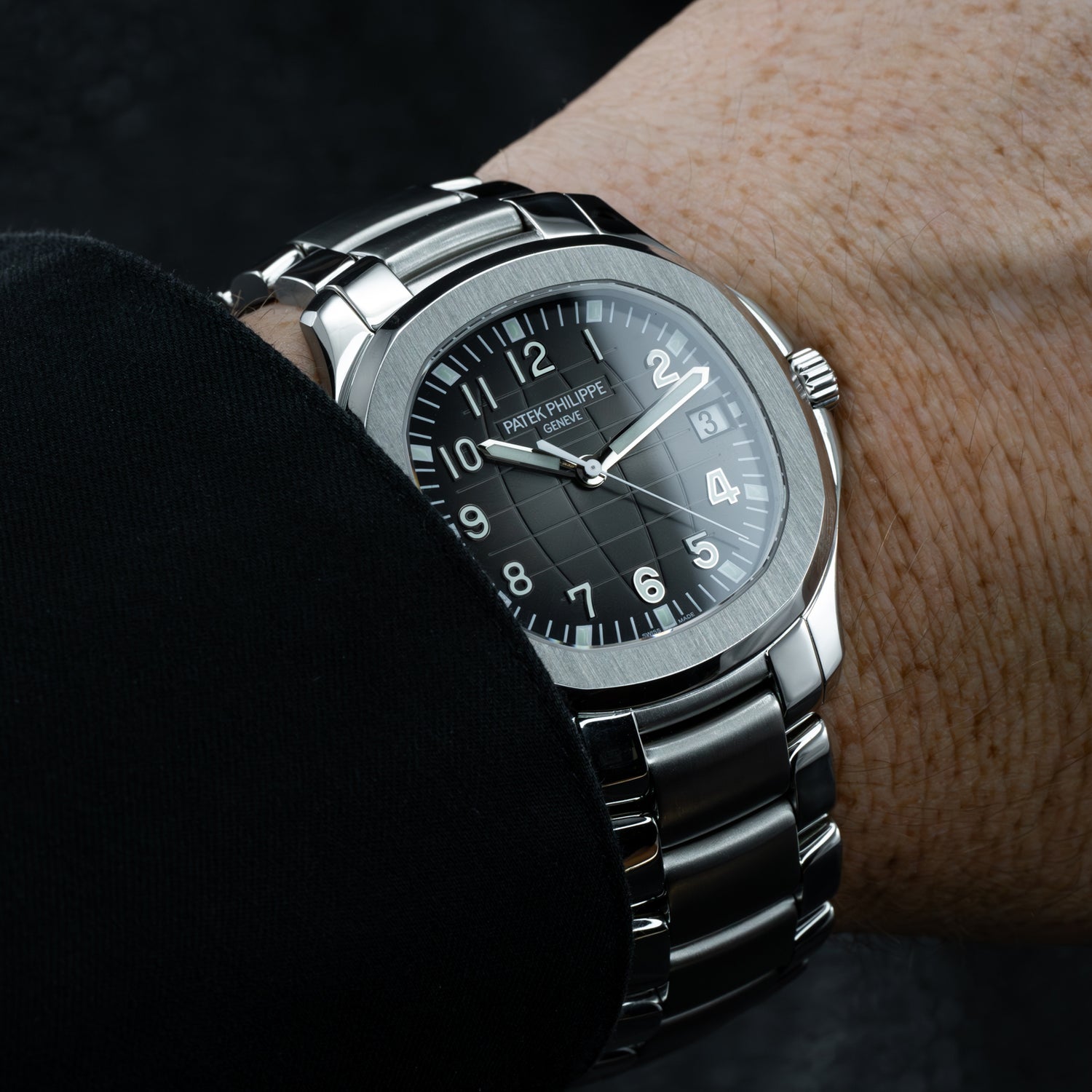
Against Patek Philippe and Vacheron Constantin, both covered elsewhere in this guide series, AP's manufacturing pedigree holds its own, all three brands trace their complications heritage back to 19th-century pocket-watch work, and all three remain committed to in-house movement production. What separates AP most clearly is the Royal Oak's cultural footprint, no comparable reference from Patek or Vacheron carries quite the same instant, cross-generational recognition the Royal Oak's octagonal bezel does. That recognition is a double-edged advantage though, it's also why AP's Code 11.59 and Jules Audemars lines, despite carrying the same manufacturing depth, remain comparatively overlooked next to the Royal Oak and Offshore, a dynamic that mirrors how Jaeger-LeCoultre's manufacturing reputation gets overshadowed by louder names elsewhere in this same guide series.
What should you check before buying a pre-owned Audemars Piguet?
Confirm the specific reference and production year, since AP has made meaningful updates across all four lines covered here over the decades, particularly on the Royal Oak and Offshore, where case dimensions and dial details have shifted repeatedly since 1972 and 1993 respectively. Check box, papers, and service history carefully, since documentation gaps show up more often at this price tier than buyers expect, and a Royal Oak or Offshore missing its original bracelet links specifically can be a costly gap to fill later. Understand that servicing a Royal Oak, Offshore, Code 11.59, or Jules Audemars properly should go through a qualified specialist given the complexity of the movements involved, particularly on any complicated Code 11.59 reference, where a generalist watchmaker unfamiliar with AP's specific architecture can introduce problems that weren't there to begin with. For the full pre-owned checklist that applies across any brand, here's the complete buying guide.
Price and value: what actually holds
Straight talk on this one. The standard Royal Oak in steel carries the longest waitlists and the tightest allocation in the brand's entire catalog, a direct result of demand consistently outpacing supply for the reference everyone recognizes first. The Offshore trades some of that waitlist pressure for a bolder aesthetic, generally more accessible while still carrying real collector demand, particularly on the more distinctive executions like the Beast, Elephant, and End of Days covered above. The Code 11.59 sits in an interesting position, newer, less immediately recognizable to a casual observer, and correspondingly easier to actually source in some configurations, while still carrying AP's full manufacturing pedigree and its most serious complications. Jules Audemars, given its lower profile relative to the other three lines, tends to draw a buyer who values the manufacturing story and classical aesthetic over broad recognition specifically.
Buy an Audemars Piguet because the specific reference and what it represents move you, and treat any resale strength as a bonus on top of that. A well-documented, well-serviced piece from any line in the current catalog is a sound purchase regardless of where the broader collector market moves, the manufacturing depth underneath doesn't fluctuate with how much public attention any single reference happens to be getting in a given year.
Where does KROLUX actually fit into buying an Audemars Piguet?
We source Audemars Piguet regularly across all four lines, including the now-discontinued Jules Audemars, and we're selective about which references we take on, each piece individually, with its own serial number and its own photos, instead of ongoing stock that we restock and reorder. Beyond the four pieces shown above, we've sourced individual examples across the full range detailed throughout this guide: a Royal Oak Double Balance Wheel Openworked, both Code 11.59 complications and the Starwheel, and a wide run of Offshore pieces including both Beast references, the Brick and Half Brick, the Bleu Nuit Nuage 50, the Elephant, and the End of Days. If you're chasing a specific Royal Oak, Offshore, Code 11.59, or Jules Audemars reference, reach out and we'll help you source it. That's the whole point of this Audemars Piguet buyer's guide: know what separates each family before you buy into one, then come to us for the piece itself.