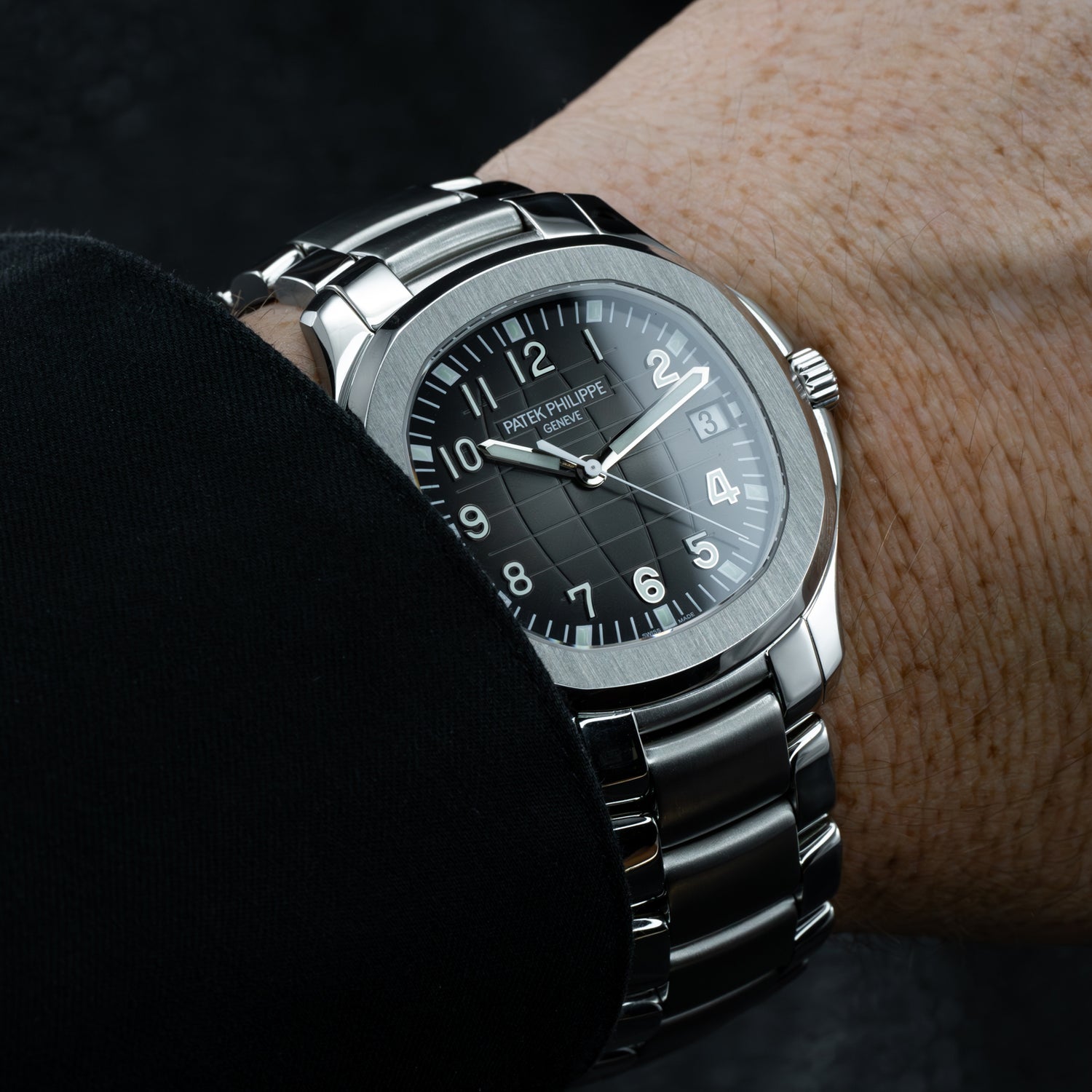

Patek Philippe treats manufacturing philosophy as the whole point, family-owned since 1932, building a genuinely small number of watches a year with an emphasis on finishing and complication depth over production scale. The Nautilus and Aquanaut carry that philosophy into a wearable sports format, while Calatrava, Golden Ellipse, and the Complications collections cover everything from pure dress watchmaking to genuine grand complications. This guide walks through what each actually looks and feels like, what the Patek Seal means for you, and what to check before buying pre-owned.
Patek Philippe gets treated as the unofficial top of the watch collecting hierarchy, and unlike a lot of that kind of reputation, this one's actually earned through decades of consistent manufacturing philosophy rather than marketing alone. This guide walks through what that philosophy actually means family by family, starting with where it comes from.
What's in this guide
- What actually makes Patek Philippe's approach different
- Nautilus
- Aquanaut
- Complications
- Calatrava
- Golden Ellipse
- Grand Complications
- Materials: what each case actually looks and feels like
- Bracelets and straps
- The Patek Philippe Seal, and what it actually certifies
- Dial and size variety worth knowing
- What each function actually does, day to day
- Notable references worth knowing
- A quick note on reference numbers
- How to choose between Nautilus, Aquanaut, Calatrava, and the complication lines
- How Patek Philippe compares to Rolex, AP, and Vacheron Constantin
- What to check before buying pre-owned
- Price and value: what actually holds
- Where KROLUX fits in
What actually makes Patek Philippe's approach different?
Patek has remained family-owned and independent since Charles and Jean Stern, previously the dial supplier Cadrans Stern Frères, acquired the company in 1932 during the Great Depression, appointing watchmaker Jean Pfister to lead it and internalizing movement production. That matters because it means the brand answers to its own long-term manufacturing philosophy rather than quarterly production targets or outside shareholders, a distinction that still shapes how Patek operates under Thierry Stern, grandson of Henri Stern, today.
Patek produces a genuinely small number of watches annually compared to Rolex, prioritizing finishing depth and complication complexity over raw production scale. That philosophy runs deeper than marketing language, the brand's own history includes completing the Graves Supercomplication in 1933, a pocket watch housing 24 complications that took five years to construct and remained the most complicated watch in the world for decades. The commission itself came from Henry Graves Jr. in 1925, meaning the entire project, brief to finished object, spanned close to a decade, a timeline almost no modern manufacturing operation would tolerate today. Henri Stern, who joined the company in 1935, later founded the Henri Stern Watch Agency in New York in 1945-46, building the American market for the brand from the ground up rather than through a licensing arrangement.
That family continuity is genuinely rare in an industry where most historic houses have passed through multiple ownership changes, conglomerate acquisitions, or complete relaunches, several of the other brands covered elsewhere in this guide series have gone through exactly that kind of transition at least once in their history. Four generations of Sterns have now led the company, and each generation has had the chance to make decisions on a multi-decade timeline rather than answering to outside shareholders demanding quarterly growth. That's a meaningfully different set of incentives than almost any other brand in this guide series operates under today.
Here's what each current line is actually like to wear, with the manufacturing philosophy behind why it looks the way it does. This Patek Philippe buyer's guide walks through each on its own terms.
Nautilus: the reference that redefined the category

The Nautilus, designed by Gerald Genta and introduced in 1976 as reference 3700, brought Patek's manufacturing philosophy into an integrated-bracelet steel sports watch, the same broader category Genta created for Audemars Piguet's Royal Oak a few years earlier. The porthole-shaped case and horizontally embossed dial remain instantly recognizable on the wrist, sporty and substantial without ever losing the finishing quality underneath, a case shape and dial texture combination genuinely distinct from anything else on this list even at a glance across a room. The steel reference 5711/1A, introduced in 2006, became one of the most sought-after watches in the entire industry, with waitlist demand that consistently outpaced supply until Patek discontinued it on January 25, 2021, closing the run with a sunburst olive green dial execution. The brand's own stated reasoning was protecting the integrity of the line rather than chasing the demand further, a genuinely unusual decision for a company to voluntarily kill its own best-selling reference at the height of its popularity. Complication references, like the Annual Calendar Moon Phase we've sourced, extend the Nautilus case language into genuinely serious watchmaking. We've individually sourced a Nautilus Annual Calendar Moon Phase in black dial and a Ladies Nautilus with a diamond bezel, the smaller-cased execution of the same porthole silhouette dressed up with stone-setting rather than left in plain steel.

Aquanaut: the more accessible sports sibling

The Aquanaut, introduced in 1997, takes a similar sports-watch philosophy in a more contemporary case shape, paired with a distinctive checkered rubber strap rather than an integrated bracelet. It genuinely reads as the more casual, modern sibling to the Nautilus, and it's generally more accessible to actually source while still carrying Patek's full manufacturing pedigree, a genuine everyday alternative for a buyer who wants Patek's engineering without the multi-year wait a steel Nautilus reference historically required. We've individually sourced three Aquanaut pieces: a steel execution in black dial, a rose gold execution in brown dial, and a white gold execution in blue dial, real range across materials within the same accessible-sports-watch silhouette, the deepest single-family collection of individually sourced pieces of any brand in this batch.


Complications: technical depth without the "grand" prefix

Patek separates its complicated watches into two tiers, Complications and Grand Complications, and the distinction is worth understanding rather than assuming they're the same thing. The Complications collection covers genuine, serious mechanisms, annual calendars, chronographs, travel-time functions, that stop short of the combined complexity (typically a perpetual calendar paired with a minute repeater or similar) that earns the "Grand" designation. Both collections carry the same underlying manufacturing standard throughout, the distinction is purely about function count and combination. The Annual Calendar Chronograph we've sourced combines two real functions in a single reference, genuine technical depth in a wearable, daily-appropriate package rather than a showpiece reserved for special occasions. It's the tier of Patek complication most likely to actually get worn regularly rather than kept for rare occasions, technical enough to satisfy a serious collector's appetite without the ceremony a Grand Complication piece tends to invite.
Calatrava: the purest expression of the dress watch
Introduced the same year the Stern family acquired the company, 1932, the Calatrava established the design principle that still runs through the brand: form follows function, understated, legible, and clear rather than decorative for its own sake. It typically runs a thin round case, the "Officer-style" case-back and lug design shows up across several references, and an ultra-thin movement keeps the whole watch slim on the wrist. It's the line for a collector who wants the purest, quietest expression of Patek's philosophy, and it's remained in continuous production longer than nearly any other watch line in this guide series without ever needing to reinvent itself to stay relevant. We don't have a Calatrava on hand right now, reach out and we'll help you source one.
Golden Ellipse: proportion as the entire design statement
A genuinely distinctive oval case shape, proportioned according to the golden ratio, the mathematical proportion associated with visual harmony since antiquity. Current references run some of the thinnest movements in Patek's whole catalog, keeping the case profile close to 6mm despite housing a full mechanical movement. It wears quiet and architectural, a watch built around a design idea first and a complication count a distant second, the kind of reference a collector tends to add once they already own something louder and want a piece that rewards a closer look instead. We don't have a Golden Ellipse on hand right now, reach out if that's what you're after.
Grand Complications: the top of the technical hierarchy
Where Complications references combine two genuine functions, Grand Complications push further still, perpetual calendars, minute repeaters, and combinations of the two represent some of the most demanding watchmaking Patek produces. These references trace a direct line back to the manufacturing philosophy that produced the Graves Supercomplication in 1933, fewer watches, held to a genuinely exacting standard throughout. Development timelines for a single new Grand Complication reference can run years rather than months, closer to how the brand approached the Graves commission nearly a century ago than how most modern product cycles work, patience built into the manufacturing process itself rather than treated as a constraint to engineer around. We don't have a Grand Complications piece on hand right now, reach out and we'll help you source one.
Materials: what each case actually looks and feels like
Stainless steel: the default across the Aquanaut and Nautilus three-hand references, cool grey-white, durable, and genuinely the hardest material to actually source given how limited steel production runs are relative to demand.
Rose gold: offered across Aquanaut, Complications, and select Nautilus references, warming the case considerably and generally easier to source than an equivalent steel reference.
White gold: a cooler, brighter tone than rose or yellow gold, common on Aquanaut and Calatrava references, and the standard choice for diamond-set pieces since the cool tone lets stones read cleanly.
Yellow gold: the traditional, classic gold tone, most associated with Calatrava and other dress-forward references.
Diamond-set cases and bezels: appear across select Nautilus and Aquanaut references, including the Ladies Nautilus we've sourced, adding a jewelry dimension without changing the underlying case architecture.
Across every material, Patek's finishing carries the same standard the internal Seal tests for, meaning even a steel Aquanaut gets the same finishing-technique attention as a precious-metal Grand Complication, just executed on a different base material.
Bracelets and straps
Nautilus references run on an integrated steel or precious-metal bracelet that flows directly into the case, part of Genta's original design and inseparable from the model's identity, the bracelet and case were conceived together from the start rather than a bracelet added afterward to an existing case shape. Aquanaut runs on its own distinctive textured rubber strap, embossed with a waffle-style pattern, genuinely different in feel and formality from the Nautilus bracelet despite the related case language, and considerably more casual to actually wear day to day than an integrated metal bracelet. Calatrava and Golden Ellipse both lean toward leather straps, reinforcing their dress-watch intent, while Complications and Grand Complications references vary by specific model, some on leather, some on a bracelet depending on the case shape.
The Patek Philippe Seal, and what it actually certifies
Every Patek Philippe watch produced since 2009 carries the Patek Philippe Seal, the brand's own internal quality mark, replacing the external Geneva Seal the brand used previously. The Seal tests the finished watch as a complete object, movement finishing, case construction, and functional performance including precision, rather than certifying the movement alone before casing. In practice, what that means for you as a buyer is a documented, brand-verified standard across the whole watch, mechanism and case construction together, reinforcing the same "fewer watches, higher standard" philosophy that runs through everything else Patek does, from the Graves commission in the 1930s to the newest Grand Complications references shown at Watches and Wonders today. The switch from the external Geneva Seal to Patek's own internal standard in 2009 was itself a statement, the brand decided its own quality bar was more demanding than the external certification it had relied on for decades.
Dial and size variety worth knowing
Nautilus dials carry the model's signature horizontally embossed texture across most references, with color variation, black, blue, and green all appear across the current catalog, doing much of the personality work on top of that shared structure. Aquanaut dials run a similar embossed pattern in a slightly different grid, with a wider color range that leans more casual than the Nautilus. Calatrava and Golden Ellipse dials stay closest to a traditional restrained formula, applied markers and minimal decoration, letting the case proportions themselves carry most of the visual interest rather than the dial surface. Case sizes run moderate across the whole catalog compared to some brands in this guide series, most Nautilus and Aquanaut references sit in the 35-42mm range depending on the specific model and whether it's sized for a men's or ladies' wrist. Golden Ellipse and select Calatrava references run smaller still, sized around their own thin-movement construction rather than a standard sport-watch diameter.
What each function actually does, day to day
Patek's complications tend to showcase genuine watchmaking depth rather than solving a narrow practical problem. Here's what you'll actually encounter.
Chronograph (select Complications references): press the pusher and it starts timing, a stopwatch layered onto the time display, useful for anything from a race to a meeting.
Annual calendar (select Nautilus and Complications references): tracks the date correctly across months of different lengths without manual correction, needing only one adjustment a year rather than after every 30-day month, a genuine daily convenience wrapped in serious mechanical complexity, the kind of function that quietly rewards a buyer who wears the watch every day rather than rotating it out of a collection regularly. Confirming the date correctly reset after any period sitting unworn is worth checking on a pre-owned piece specifically, since a stopped annual calendar needs a specialist to properly re-set rather than a simple crown adjustment.
Moon phase (select Nautilus references, including the piece we've sourced): a rotating disc showing the moon's current phase through a dial aperture, a traditional complication that adds visual and mechanical interest alongside the calendar function it's typically paired with.
Perpetual calendar (Grand Complications): goes further than an annual calendar, correctly tracking leap years as well as month length without any manual correction for decades at a stretch, one of the most demanding mechanical calendar functions in watchmaking, and a genuine reason perpetual-calendar references command the premium they do within the Grand Complications line.
Notable references worth knowing
The discontinued steel Nautilus 5711/1A, particularly the final olive-green dial execution, has become the reference point for the entire modern Nautilus story, still discussed constantly even years after production ended. The Aquanaut's checkered rubber strap has become distinctive enough on its own to function as a design signature independent of the case, recognizable to a collector even in a photo cropped tight enough to hide the dial entirely. Vintage Calatrava references from earlier in the collection's nearly century-long history carry their own dedicated collector interest, distinct from current production and requiring specialist authentication given how long the line has run. The Golden Ellipse's golden-ratio proportions have made it a recurring favorite among collectors who prioritize design theory over resale liquidity, a genuinely different collecting motivation than chasing the most famous reference in the catalog.
A quick note on reference numbers
Patek Philippe reference numbers combine a numeric code with a letter suffix indicating case material, for example the R in 5905R for rose gold or the A in 5167/1A for steel. Two watches both casually called "the Nautilus" can be genuinely different references once you check the actual number, confirm it directly before assuming two listings describe the same piece, complication, case material, and production era can all shift under that single family name. A slash and additional digits after the base number, like the /1A in 5167/1A-001, further narrows down the exact case and dial configuration, worth reading the full string rather than stopping at the first four digits.
Nautilus vs Aquanaut vs Calatrava vs the complication lines: how do you actually choose?
Start with how sporty or formal you want the watch to read. If you want the reference most directly tied to Patek's modern sports-watch reputation, the Nautilus is the answer, though sourcing the steel three-hand specifically requires real patience given the discontinued 5711's status. The Aquanaut is the more accessible entry point of the two sports lines, given the steel Nautilus is no longer in production, and it wears noticeably more casual day to day.
Calatrava is the pick for a collector who wants the purest, quietest expression of the brand's dress-watch philosophy, and Golden Ellipse for a collector who wants that same restraint built around an even more distinctive case shape. The Complications and Grand Complications lines showcase the manufacturing depth the brand is actually known for among serious collectors, worth considering once you've decided you want genuine mechanical complexity as part of the purchase, the case design being a secondary consideration at that point.
How does Patek Philippe compare to Rolex, AP, and Vacheron Constantin?
Rolex builds at genuine industrial scale with an emphasis on consistency, durability, and universal recognition. Patek builds at a fraction of that scale with an emphasis on complication depth and manufacturing prestige within serious collecting circles specifically, a meaningfully smaller number of watches produced in a given year than Rolex ships in a matter of weeks. Against Audemars Piguet's Royal Oak and Vacheron Constantin's Overseas, both covered elsewhere in this guide series, the comparison is closest of any brand pairing here, all three descend from the same 1970s integrated-bracelet sports-watch moment, and the differences come down to finishing philosophy and brand culture more than any single spec. Genta himself designed both the Nautilus and the Royal Oak within a few years of each other, which is part of why the comparison keeps coming up, the underlying design DNA genuinely does trace back to a shared source.
What should you check before buying a pre-owned Patek Philippe?
Confirm the specific reference and production era carefully, since Patek's production changes, the Nautilus 5711's 2021 discontinuation especially, meaningfully affect both availability and value in ways that shift faster than the rest of the used-watch market typically does. Check box, papers, and service history with particular care at this tier, since documentation gaps are taken even more seriously here than at other luxury tiers, a missing extract from the archives or an incomplete service record can meaningfully affect what a serious buyer is willing to pay. On any Complications or Grand Complications reference specifically, confirm the complication set functions correctly and ask for documented service history from an authorized specialist, these movements are complex enough that a poor service history genuinely affects both function and value. On a discontinued Nautilus reference specifically, confirm the exact production year and any documentation tying it to the specific run, since value on these pieces varies meaningfully even within the same base reference number depending on when it left the factory. For the full pre-owned checklist that applies across any brand, here's the complete buying guide.
Price and value: what actually holds
Straight talk on this one. Rolex still wins on resale liquidity and universal recognition among casual buyers, but Patek Philippe operates in a genuinely different tier entirely once you're inside serious collecting circles. The discontinued steel Nautilus specifically saw meaningful price appreciation after the January 2021 announcement, roughly 31% within weeks and closer to 49% comparing full-year averages, though that kind of sudden appreciation is the exception across the catalog rather than something to expect on any given reference, most current-production Patek references track far more modestly than the discontinued 5711's headline numbers suggest. Grand Complications and genuinely rare vintage pieces tend to hold the strongest collector interest over the long term, given how genuinely few of them exist relative to demand across the whole collecting world.
None of this is a guarantee, and anyone promising guaranteed appreciation on a specific piece is selling you a story, the same warning that applies to any brand covered in this guide series. Buy a Patek Philippe because the manufacturing philosophy and the specific reference genuinely move you, and treat any resale strength as a bonus on top of that. A well-documented, well-serviced piece from any line in the current catalog is a sound purchase regardless of where the broader collector market moves in any given year.
Where does KROLUX actually fit into buying a Patek Philippe?
We deal in Patek Philippe regularly and we're highly selective about which references we take on, each piece individually, with its own serial number and its own photos, rather than ongoing stock we restock and reorder, a brand at this level demands it, the stakes on getting documentation and provenance right only go up as the watchmaking gets more serious. We've individually sourced six pieces spanning Nautilus, Aquanaut, and the Complications collection, and for anything else, including Calatrava, Golden Ellipse, or Grand Complications references, reach out and we'll help you source the right one, whether that's a specific complication, case material, or a discontinued reference. That's the whole point of this Patek Philippe buyer's guide: know the manufacturing philosophy before you buy into it, then come to us for the piece itself.