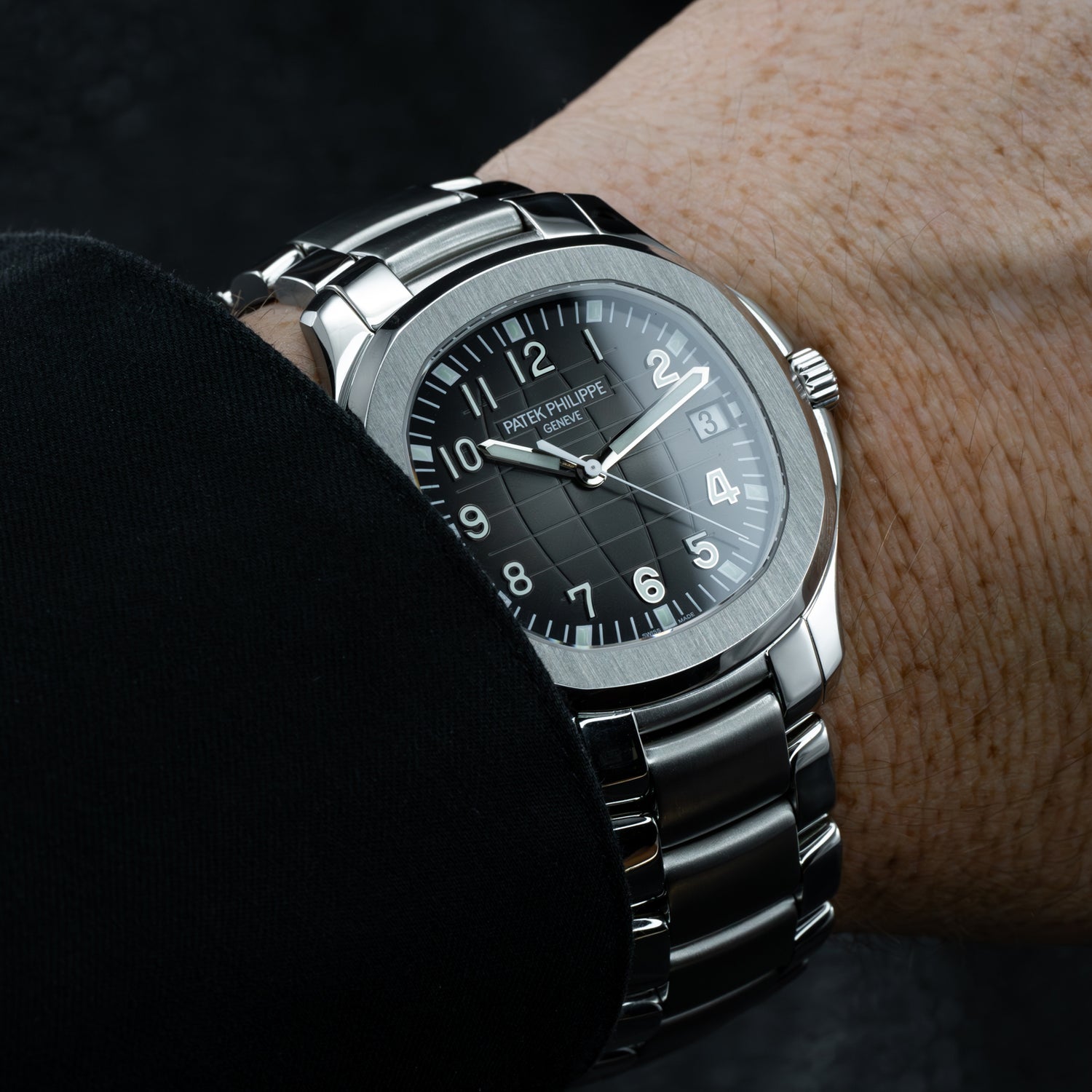

Omega runs four families that matter for most buyers: Seamaster (the dive and everyday-sport line, including the Bond watch and the vintage-styled Seamaster 300 Heritage), Speedmaster (the chronograph line, including the actual Moonwatch), Constellation and De Ville (the dress lines). Every serious modern Omega runs on a Co-Axial movement with METAS Master Chronometer certification, a real, testable engineering advantage. This guide walks through what each family actually looks and feels like, what that movement technology means for you day to day, and what to check before buying pre-owned.
Omega has a strange problem for a brand this good. Everybody's heard of it, half the market treats it as "the watch under Rolex," and almost nobody stops to ask why NASA picked it, why divers trusted it before dive computers existed, or what's actually happening inside the movement. So let's slow down and look at the brand on its own terms instead of as someone else's runner-up.
Two families do most of the heavy lifting in Omega's lineup, Seamaster and Speedmaster, and each one splits further into pieces built for genuinely different jobs. Add Constellation and De Ville for the dress side of the catalog, and you've got a brand with a real answer for almost every wrist and every occasion, a lineup built around genuinely different jobs rather than one famous silhouette repeated in different colors. That's what this Omega buyer's guide is built to sort out, family by family.
What's in this guide
- The core model families, what each looks and feels like
- Materials: what each metal actually looks and feels like
- Bracelets and straps: how the fit actually changes
- The Co-Axial movement, and what it actually means for you
- Dial and size variety worth knowing
- What each function actually does, day to day
- A quick note on reference numbers
- How to choose: Seamaster vs Speedmaster vs Constellation vs De Ville
- Omega vs Rolex, the real comparison
- What to check before buying pre-owned
- Price and value: what actually holds
- Where KROLUX fits in
The core Omega model families: what each one actually looks and feels like
Start with the history, because it isn't manufactured. Omega's Speedmaster became NASA's qualified spacewalk chronograph in 1965 after surviving a brutal battery of tests nobody rigged in Omega's favor, and it's been on the wrist of NASA astronauts on every crewed lunar mission since. The Seamaster carries its own version of the same story, Omega's dive watch lineage since the 1940s, decades before dive computers existed and long before "dive watch" was a marketing category instead of an actual safety tool. Here's what each family is really like to wear, with the mechanics and history filling in the details behind the look.
Seamaster Diver 300M: the tool watch with a movie career

On the wrist the Diver 300M reads sporty and purposeful, a laser-etched wave-pattern dial that echoes the ocean, a unidirectional ceramic bezel, and a case that wears substantial without tipping into oversized. The Bond connection gets the headlines, Daniel Craig's 007 has worn one since Casino Royale, and the "No Time To Die" edition, one of the pieces we've sourced individually, leans into that with a tropical brown-fading dial and a khaki NATO or bracelet option, but the watch was doing serious diving work for fifty years before Bond ever put one on.
It's rated to 300 meters, built with a helium escape valve for saturation diving, and running on Omega's Co-Axial Master Chronometer movement across the current range. We've individually sourced three Diver 300M pieces, including the 007 edition and a standard black-dial version. Reach out if you're after a specific dial color and we'll help you track one down.
Seamaster 300 Heritage: the vintage re-edition

Where the Diver 300M is Omega's modern dive tool, the Seamaster 300 Heritage is the deliberate throwback, a re-edition built around the proportions and details of the original 1957 Seamaster 300 rather than the current professional dive line. Broad-arrow style hands, a domed crystal that catches light differently than a flat modern sapphire, and a slimmer, more vintage-proportioned bezel give it a completely different personality on the wrist than its stablemate, quieter, warmer, and closer to how a dive watch looked before dive computers or helium valves existed. The Co-Axial Master Chronometer movement inside is fully modern even though the case language isn't.
It's the Seamaster for a buyer who wants the lineage and the dive-watch DNA without the bulkier, more technical read of the Diver 300M. The Seamaster 300 Heritage shown above, complete set, is a piece we've sourced individually.
Seamaster Planet Ocean: the deeper, bigger dive tool

Where the Diver 300M is Omega's do-anything sport watch, the Planet Ocean is the one built specifically for people who actually go deep. It's rated to 600 meters, with bigger cases across the board (39.5mm up to 45.5mm depending on the reference), and a bezel and lume designed to stay legible in genuinely dark water far below where a pool or a shallow snorkel would ever take you. It wears bigger and more technical on the wrist, closer in spirit to a dedicated dive computer than a lifestyle accessory.
We've individually sourced two Planet Ocean pieces, including a 45.5mm titanium chronograph and a black ceramic Sedna gold two-tone. Titanium keeps the larger case surprisingly light on the wrist, worth knowing if the 45.5mm number alone has you hesitating.
Seamaster Aqua Terra: the everyday luxury sport watch

This is the Seamaster for people who won't go anywhere near a dive site. The signature teak-pattern dial (horizontal ridges borrowed from a boat deck, a nautical reference most owners will only ever see on dry land) is thinner and more refined than the Diver 300M's wave pattern, the case sits noticeably slimmer, and 150 meters of water resistance is plenty for swimming and daily wear without the visual bulk of a dedicated dive watch. It's the Seamaster you can wear under a cuff to a meeting and to dinner after.
We've individually sourced two Aqua Terra pieces, a 41mm blue dial and a 38mm blue dial with box and papers, the smaller size worth knowing about if a 41mm case reads too big on your wrist. For a closer look at one of these exact pieces, here's our full spotlight on the Aqua Terra blue dial.
Speedmaster Professional "Moonwatch": the actual moon watch

The name "Moonwatch" is literal. This is the reference NASA astronauts wore on the moon during the Apollo missions, after Omega's Speedmaster survived a battery of qualification tests in 1965 that no other watchmaker's chronograph passed. The look hasn't fundamentally changed since, a black dial, a three-subdial chronograph layout, a tachymeter bezel wrapped around the outside, and in its most traditional execution, a manual-wind movement you actually have to wind by hand every morning.
That daily wind is a genuine feature for the right buyer. It's the closest most people will ever get to wearing a piece of unmodified 1960s engineering on a daily basis. Among the Moonwatch Professional pieces we've individually sourced are a white dial on strap and a gold-cased green dial, both the classic manual-wind execution, the one with the direct lineage to the actual moon landing. Reach out and we'll confirm exactly which configuration we've got sourced versus available to track down right now.
Speedmaster Racing: the motorsport chronograph

Where the Moonwatch points at space, the Racing line points at the track. It shares the chronograph DNA and the tachymeter bezel, but runs automatic Co-Axial movements instead of hand-wound, and dial layouts lean toward motorsport styling, contrast subdials, tachymeter scales built for lap timing rather than rocket telemetry. It reads a little more modern and colorful on the wrist than the Moonwatch's austere black-and-steel look. At the far technical edge of this line sits the Super Racing, a numbered, high-precision variant most buyers won't cross paths with day to day, but worth knowing exists if you're going deep on what Omega's movement engineers are actually capable of.
The Racing Chronograph in silver dial, complete set, is a piece we've sourced individually. It's the Speedmaster for someone who wants the chronograph functionality and the pedigree without the strict, hand-wound ritual of the Moonwatch.
Constellation: the dress watch with the claws
We haven't sourced one recently, but it's worth knowing as its own distinct line in Omega's catalog. The Constellation's signature is visual before it's mechanical, four claws gripping the crystal at the case edges, a design language dating to the brand's 1980s "Manhattan" redesign that's stayed recognizable ever since. It runs the same Co-Axial Master Chronometer movement as the sport lines underneath a considerably more formal case, usually on an integrated bracelet that flows directly into the case rather than attaching to it.
It reads quiet and deliberate on the wrist, the kind of watch that doesn't announce itself the way a Speedmaster does but rewards a closer look. It's not something we currently have sourced, but if a Constellation is what you're after, reach out and we'll help you source one.
De Ville: the simplest dress line
The De Ville is also worth knowing, and it's also a piece we haven't sourced recently. If the Constellation is Omega's dress watch with a visual signature, the De Ville is Omega's dress watch without one, a clean round case, a simple dial, usually on a leather strap, built to disappear under a cuff rather than draw a second look. Sub-lines like the Trésor push the case even thinner and the styling even quieter, closer in spirit to a traditional dress watch than anything else in Omega's current catalog. It's the line for a buyer who wants the Co-Axial movement and the Omega name without any sport-watch DNA at all. Reach out if you're chasing a specific De Ville reference and we'll help you source it.
Materials: what each metal actually looks and feels like
Omega's metal choices change the color and the weight the same way Rolex's do, with a couple of proprietary alloys worth knowing by name.
Stainless steel: the default across most of the catalog, cool grey-white, durable, and the metal most Seamaster and Speedmaster pieces are built in first. It's the daily-wear choice, the one you don't think twice about knocking against a doorframe.
Sedna gold: Omega's own proprietary rose gold alloy, engineered with a specific copper and palladium ratio to resist fading over years of wear the way some rose gold formulations don't. It reads warm and a little deeper in tone than a standard rose gold, and Omega uses it across both the sport and dress lines.
Moonshine gold: Omega's proprietary yellow gold alloy, formulated to stay brighter and resist the slight fading standard 18k yellow gold can show over time. It's a cooler, brighter yellow than traditional gold, distinctive enough that collectors recognize it on sight.
Titanium: used on the larger Planet Ocean references specifically to keep a big case wearable, noticeably lighter than steel at the same dimensions, with a slightly darker, more matte grey tone.
Platinum: reserved for the most formal and limited Speedmaster and Constellation executions, the heaviest and coolest-toned option in the catalog, genuinely rare across the current lineup.
Bracelets and straps: how the fit actually changes
Omega doesn't run a named bracelet system the way Rolex does with Oyster and Jubilee, but the fit changes meaningfully depending on the line. Seamaster references typically run a brushed steel bracelet with a wave-textured or ridged link pattern, sturdy and built for daily wear, most with a diver's extension link that lets you fit the bracelet over a wetsuit sleeve if you're actually diving in it. Aqua Terra bracelets run a little slimmer and more polished, matching the dressier case underneath. Speedmaster references come on either a steel bracelet with a similar diver's-extension logic or a leather strap, the strap option reading more directly like the original 1960s tool watch. Constellation cases typically run on an integrated bracelet that's part of the overall silhouette rather than a swappable component, while De Ville pieces lean toward leather straps to match the dress-watch intent.
The Co-Axial movement, and what it actually means for you
Here's where a lot of buyers glaze over, and that's fair, most brands throw around "in-house movement" language that means almost nothing. Omega's is different, and it's worth understanding in plain terms rather than spec-sheet terms. (If mechanical movements in general are still new territory, here's the broader primer on how watch movements work before diving into what makes Omega's specific approach different.)
The Co-Axial escapement was designed by George Daniels, one of the most respected independent watchmakers of the last century, and Omega adopted it starting in 1999. A traditional Swiss lever escapement relies on sliding friction between parts, which is why mechanical watches need regular servicing, the friction wears the parts down over years. Co-Axial escapements use radial friction instead, which reduces that wear dramatically and stretches the interval between services. In practice, that means longer stretches between trips to a watchmaker and less mechanical wear accumulating inside the movement over the years you own it. It's a genuine, two-hundred-year-old mechanical problem, solved.
Layer on top of that Omega's METAS Master Chronometer certification, introduced in 2015. It tests a finished, fully cased watch for resistance to magnetic fields up to 15,000 gauss, well beyond what a standard antimagnetic watch handles, along with precision, power reserve, and water resistance under real conditions rather than a controlled lab bench. Most brands certify a movement before it's cased. Omega certifies the whole watch after final assembly, a meaningfully higher bar, and in practice it means the watch on your wrist has been tested closer to the actual conditions you'll put it through day to day.
Dial and size variety worth knowing
Dial choice does real work across the Omega catalog. The Seamaster Diver 300M's wave pattern is laser-etched directly into the dial, giving it genuine texture that catches light differently depending on the angle. The Aqua Terra's teak pattern reads finer and more refined. Speedmaster dials stay closest to the original 1960s three-subdial layout across most references, with color variation (black, white, green) doing most of the personality work rather than layout changes. Case sizes run a wide range depending on the family, Aqua Terra as small as 38mm, Planet Ocean up to 45.5mm, so the same collection can genuinely fit very different wrists depending on which reference you choose.
What each function actually does, day to day
Omega's watches aren't stacked with complications the way some brands' flagship pieces are, and that's part of the point, everything on the dial earns its place. Here's what the functions you'll actually run into do in practice.
Chronograph (Speedmaster): press the pusher and it starts timing, a stopwatch built into the watch. Press again to stop, a third press resets it. On the Moonwatch it's manually operated top to bottom, on the Racing line it runs off the automatic movement, but the function is the same, time anything from a race to a meeting to how long the coffee's been brewing.
Tachymeter bezel (Speedmaster): the scale printed around the outside of the dial converts elapsed time into speed, originally built so a driver or engineer could clock average speed over a measured distance without doing math by hand. Most owners never use it for its original purpose, but it's the visual signature that makes a Speedmaster instantly identifiable at a glance.
Unidirectional dive bezel (Seamaster Diver 300M, Planet Ocean): rotates one direction only, so a diver tracking elapsed air time can only ever underestimate what's left, never overestimate it. Line up the marker with the minute hand at the start of a dive and the bezel tells you how long you've been down at a glance.
Helium escape valve (Seamaster Diver 300M): a small valve on the case that releases helium gas that builds up in the watch during saturation diving, where divers live in a pressurized environment for days at a time. It's a genuinely niche function, almost nobody buying a Diver 300M is doing saturation dives, but it's a real engineering holdover from the watch's actual working history.
A quick note on reference numbers
Omega reference numbers are long strings of numbers separated by periods (for example, 210.90.42.20.01.001) that encode the case material, size, dial, and bracelet or strap configuration. Two watches that get called "the Seamaster" in casual conversation can be genuinely different pieces once you look at the actual reference, so confirm the exact number before assuming two listings are interchangeable, the same rule that applies to Rolex.
Seamaster vs Speedmaster vs Constellation vs De Ville: how do you actually choose?
If this is your first serious watch purchase rather than an addition to a collection, here's what nobody tells you about buying your first luxury watch before you narrow it down to Omega specifically. Start with what you actually do with the watch. If you swim, dive, or just want the most capable sport watch in the lineup, the Seamaster is the answer, and which Seamaster depends on how deep that capability actually needs to go, Aqua Terra for daily wear, Diver 300M for actual diving and Bond styling, Planet Ocean if you want the deepest-rated, most technical version of the family.
The Speedmaster is the one to buy if the history means something to you, or if you specifically want a chronograph. The Moonwatch Professional is the purist's choice, hand-wound, closest to the original. The Racing line gives you the same chronograph function with an automatic movement and a more modern look.
Constellation and De Ville are the ones to consider once you want something dressier that still carries the Co-Axial movement underneath, though they get far less attention than the sport lines, and that's genuinely part of their appeal. Fewer people will recognize what you're wearing, which some collectors treat as a downside and others treat as exactly the point. Between the two, Constellation is the pick if you want a recognizable design signature, De Ville is the pick if you want the case to disappear entirely under a cuff.
How does Omega actually compare to Rolex?
This comparison gets thrown around constantly, usually badly. Here's the real version.
Rolex wins on brand recognition and resale liquidity, full stop. A Submariner will always be instantly recognizable and easy to sell, and steel sport Rolex references in high-demand colorways have historically held or exceeded retail on the secondary market in a way almost nothing else in the industry matches. Omega wins on movement technology in a meaningful, testable way. The Co-Axial escapement and METAS certification are genuine engineering advantages Rolex doesn't match on paper, even though Rolex's own in-house movements are also excellent.
Where this actually lands for most buyers: if you want the safest resale value and the most universally recognized name, Rolex is the easier answer. If you want more watch for the dollar and a genuine technical story to go with it, Omega is the clear, obvious smarter buy on that specific point. For a deeper look at how the Seamaster stacks up against Rolex's own dive watch, here's the full Submariner vs Seamaster breakdown.
What should you check before buying a pre-owned Omega?
The same rules that apply to any serious pre-owned luxury purchase, with a couple of Omega-specific wrinkles. Confirm the movement is genuinely a Co-Axial caliber if that's part of what you're paying for, since older Omega references simply predate the technology entirely, a different generation of the brand rather than a weaker one. Check that any METAS certification claim on the listing actually matches the reference and production year, since METAS didn't exist before 2015. Look closely at dial condition specifically on Speedmaster references, the tachymeter bezel and subdial printing are the details most likely to show wear or fading on an older piece.
On dive references, actually test the bezel action before buying. A Diver 300M or Planet Ocean bezel should click firmly through each notch in one direction only, any looseness or slop is a sign of wear or a prior repair worth asking about. And on a Moonwatch specifically, ask when it was last serviced, a manual-wind chronograph gets more daily use out of its movement than an automatic watch that only runs while worn, and that adds up over decades.
Treat box, papers, and service history the same way you'd treat them on any other serious watch, complete documentation is the difference between a piece you can resell without a headache and one you can't. For the full checklist on vetting any pre-owned luxury piece before you wire money, here's the complete pre-owned buying guide.
Price and value: what actually holds
Omega's resale story is different from Rolex's, and it's worth being straightforward about that rather than overselling it. Certain vintage Speedmaster references, particularly early Moonwatch executions, have held and grown in value meaningfully, but that's the exception across the catalog rather than what most buyers should expect walking in. Most modern Omega pieces will hold a reasonable percentage of their value if you buy smart and take care of them, which is a perfectly good outcome for a watch you're actually going to wear rather than store.
None of this is a guarantee, and anyone promising you guaranteed appreciation on a specific piece is selling you a story, the same warning that applies to any brand. Condition, completeness, and genuine demand for that exact reference at the moment you're buying or selling matter more than any general rule about Omega as a brand. Buy the watch you'll actually wear, and treat any resale upside as a bonus on top of that.
Where does KROLUX actually fit into buying an Omega?
Every piece we source gets authenticated before it's ever offered to a client, and we're selective about what we take on in the first place. We source pieces individually, each with its own serial number and its own photos, rather than holding ongoing stock we restock and reorder, and right now that's landed us pieces across the Seamaster and Speedmaster lines, from the Diver 300M to the Moonwatch Professional. For anything not currently among the pieces we've sourced, including Constellation and De Ville, reach out and we'll help you find the right one. That's the whole point of this Omega buyer's guide: know what you're looking at before you buy it, then come to us for the piece itself.