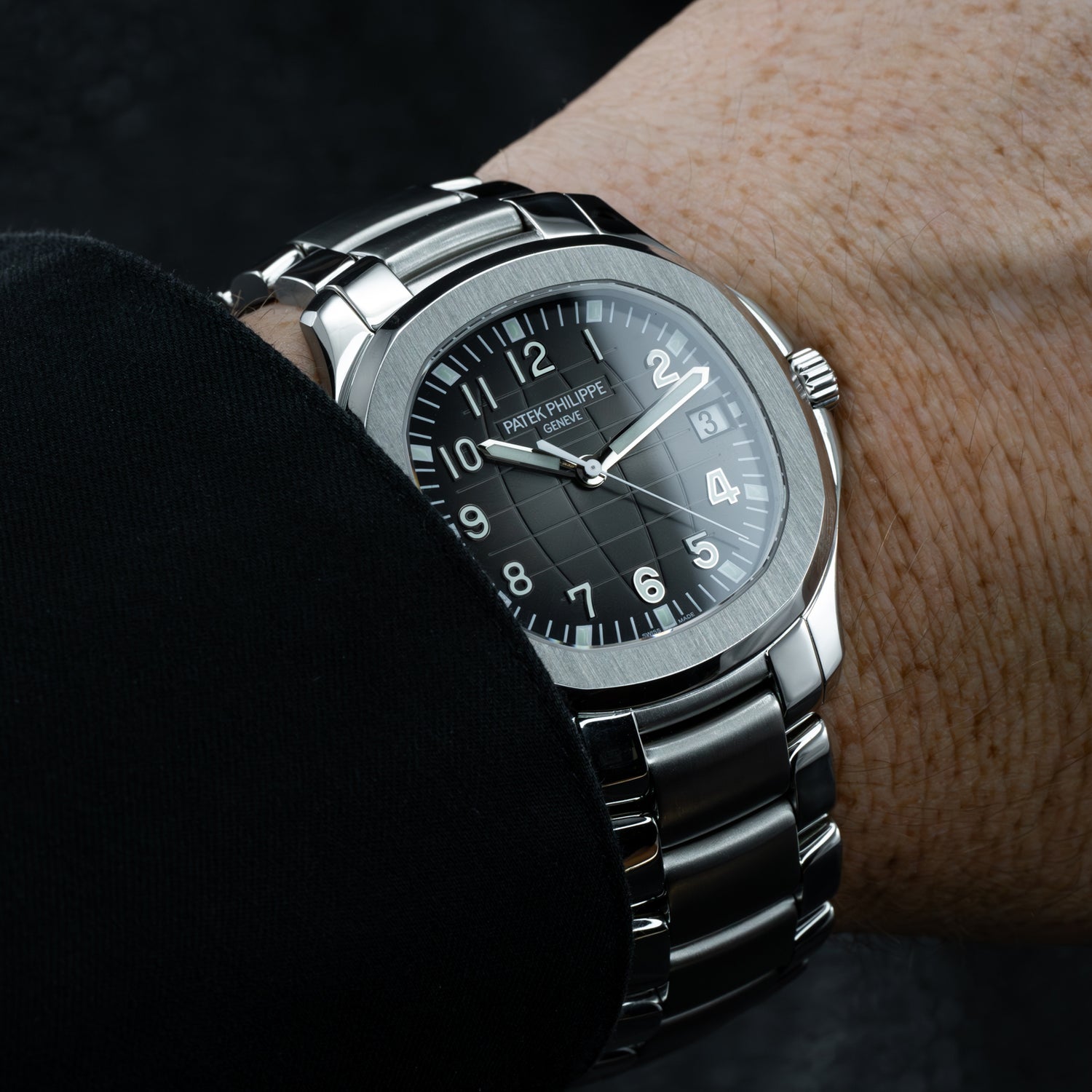

IWC, International Watch Company, was founded in Schaffhausen by an American engineer who wanted German-style manufacturing precision paired with Swiss watchmaking tradition. That engineering-first identity still runs the brand today, from the Pellaton winding system to genuine aviation and marine heritage. This guide walks through what Pilot's Watch, Portugieser, Aquatimer, and Ingenieur actually look and feel like, what the Pellaton system means for you, and what to check before buying pre-owned.
IWC gets overlooked constantly in favor of the bigger Swiss names, and that's a mistake, because its actual story is one of the more genuinely engineering-driven brands in the entire industry, closer in spirit to a serious instrument maker than a status-symbol house. Four lines carry that identity forward today, each built around a genuine mechanical or historical reason to exist rather than a marketing category invented to fill out a catalog. This IWC buyer's guide walks through each one on its own terms.
What's in this guide
- Where IWC's engineering reputation actually comes from
- Pilot's Watch: the aviation family
- Portugieser
- Aquatimer
- Ingenieur
- Materials: what each case actually looks and feels like
- Bracelets and straps
- The Pellaton winding system, and why it actually matters
- Dial and size variety worth knowing
- What each function actually does, day to day
- A quick note on reference numbers
- How to choose between Pilot's Watch, Portugieser, Aquatimer, and Ingenieur
- How IWC compares to Rolex and Omega on value
- What to check before buying pre-owned
- Price and value: what actually holds
- Where KROLUX fits in
Where IWC's engineering reputation actually comes from
Florentine Ariosto Jones, an American watchmaker and engineer, founded IWC in Schaffhausen, Switzerland in 1868, specifically to combine American manufacturing efficiency with Swiss watchmaking craft. That founding intention still shows up in how IWC approaches watchmaking today, methodical and engineering-forward, understated next to brands that lean harder on prestige and marketing. Where a lot of Swiss houses built their reputation on heritage and case design, IWC built its reputation on solving specific mechanical problems, and that difference shapes every line in the current catalog.
The brand also built its name on genuinely rugged case construction across its history, references tested to serious magnetic resistance and shock standards well beyond what daily wear requires, standards born out of real operational demands, aviation, marine navigation, industrial environments, rather than a lab test designed purely for a marketing claim. That engineering-first identity is worth keeping in mind walking into any specific line below, because it's the actual throughline connecting an aviation watch, a dress watch, and a dive watch that otherwise look like they come from three different companies.
It also explains why IWC gets described as an engineer's brand rather than a collector's-status brand. The people who gravitate toward it tend to care more about how a problem got solved than how recognizable the solution looks on a wrist across a dinner table. That's a smaller audience than Rolex's or even Omega's, and IWC seems entirely comfortable with that trade.
Here's what each current line is actually like to wear, with the engineering story filling in why it looks the way it does.
Pilot's Watch: IWC's aviation family
Four sub-lines matter here, each pulling the same aviation-instrument DNA in a genuinely different direction.
Pilot's Watch Mark: the clean aviation original
The Mark series traces back to genuine aviation history, with references built to military specification for cockpit legibility and reliability at altitude and in extreme temperature swings, historical Mark references were supplied to military aviators who needed a watch that worked when almost nothing else in the cockpit could be trusted blindly. The current Mark XX carries that legibility-first design forward, a clean dial, prominent luminous markers, and a case built to be read at a glance rather than admired up close. On the wrist it reads restrained compared to its bigger siblings, a genuinely wearable everyday size that doesn't lean on the oversized-case drama the rest of the Pilot's Watch family sometimes does. A Mark isn't currently among the pieces we've sourced, reach out and we'll help you source one.
Big Pilot: the aviation watch scaled up

The Big Pilot pushes the Mark's clean aviation dial into a genuinely large, substantial case, a design lineage that traces back to the German B-Uhr observation watches originally built oversized so a pilot could read the time at a glance while wearing thick gloves. On the wrist it reads bold and unmistakably purposeful, a wide onion-shaped crown built for the same glove-friendly logic as the case, and a dial kept deliberately simple despite the size. It's the IWC for a buyer who wants maximum wrist presence without moving into a sport-diver silhouette to get it. The Big Pilot Top Gun in black dial, ceramic case, shown above is a piece we've sourced individually.
Spitfire: the vintage-toned aviation line

Named for the WWII fighter aircraft, the Spitfire sub-line takes the same Pilot's Watch DNA and warms it up, bronze case options, greens and browns instead of pure black and steel, a genuinely vintage-leaning read compared to the starker Mark and Big Pilot executions. It wears warmer and a little more characterful on the wrist, the IWC for a buyer who wants the aviation story with a softer visual register than the Big Pilot's stark presence or the Top Gun's tactical read. We've individually sourced a Spitfire Chronograph, black dial, complete set.
Top Gun: the ceramic and titanium tactical line

Top Gun references run across both the Big Pilot and Mark families, distinguished by ceramic or titanium case construction instead of steel, tied to IWC's partnership with the US Navy's Top Gun program. Ceramic reads matte and scratch-resistant in a way polished steel never does, and it wears noticeably lighter than the case size suggests, titanium and ceramic both cutting meaningful weight off the wrist compared to a steel equivalent. The colorway options lean tactical, black, grey, and the sandy tan of the "Lake Tahoe" edition we've sourced. We've individually sourced two Top Gun pieces, the Big Pilot in black ceramic and the Lake Tahoe chronograph.
Portugieser: the dress line with an engineering origin story

The Portugieser has a genuinely unusual origin for a dress watch, two Portuguese businessmen approached IWC in the 1930s wanting the precision of a marine chronometer inside a wristwatch, and the result was a case built large specifically to fit a pocket-watch-grade movement rather than to look large as a style choice. That practical origin is still visible today, a clean dial, applied Arabic numerals, and a case size that reads substantial for a dress watch family. It's the IWC for a buyer who wants precision and history in a genuinely formal package rather than anything sport-adjacent. Some references run the Eight Days power reserve, a hand-wound movement built to run a full eight days on a single wind, a genuinely useful benefit for a watch that might sit in a drawer over a work week. We've individually sourced a Portuguese Hand-Wound Eight Days piece, the 150th-anniversary edition.
Aquatimer: the dive line
IWC's dedicated dive watch family, built around genuine depth ratings and a rotating bezel system engineered for actual underwater use, some generations run an internal rotating bezel operated through the crown rather than the more common external bezel, reducing the risk of accidentally bumping your elapsed-time setting mid-dive. It wears technical and purposeful on the wrist, closer in spirit to the Big Pilot's function-first design language than to the Portugieser's formality, with a case built to handle real depth rather than merely survive a pool. Quick-change strap systems on newer generations let the same case move between a bracelet for daily wear and a rubber strap for actual diving, without a jeweler's tools. An Aquatimer isn't currently among the pieces we've sourced, reach out and we'll help you source one.
Ingenieur: the engineering watch, literally
The line whose name says the quiet part out loud. Originally developed with input from engineers and physicists focused on magnetic resistance, the Ingenieur carries a soft-iron inner case built to shield the movement from magnetic fields well beyond what a standard watch handles, useful for anyone who actually works around industrial equipment, MRI machines, or heavy electronics. It reads sportier and more architectural than the Portugieser, closer to an integrated-bracelet sport watch than a traditional dress piece, with a case shape and bracelet integration that reward a closer look rather than announcing themselves from across a room. It's a genuine niche pick within the catalog, most buyers who land on it already know specifically why they want it rather than discovering it as a default choice. An Ingenieur isn't currently among the pieces we've sourced, reach out if that's what you're after.
Materials: what each case actually looks and feels like
Stainless steel: the default across most of the catalog, cool grey-white, durable, the daily-wear choice on Mark, standard Big Pilot, and most Aquatimer references.
Ceramic: used specifically on Top Gun references, matte black or a lighter tactical tone, genuinely scratch-resistant in a way polished metal isn't, and noticeably lighter on the wrist than the case size implies.
Titanium: appears across select Top Gun and Aquatimer references, lighter still than ceramic, with a darker, more matte grey tone suited to the tool-watch intent underneath it.
Bronze: used on select Spitfire references specifically, a material that develops its own patina over years of wear, meaning two Spitfire owners' watches can look meaningfully different after a few years even if they started identical, a feature collectors of this specific line actively seek out rather than avoid.
Gold: offered across Portugieser and select high-complication references, reserved for the most formal executions in the catalog.
Bracelets and straps
Pilot's Watch references, across Mark, Big Pilot, Spitfire, and Top Gun, run primarily on leather straps, reinforcing the aviation-instrument read rather than a sport-watch bracelet feel, though select Big Pilot and Top Gun references offer a metal bracelet option for buyers who want a more substantial daily-wear setup. Portugieser references lean almost entirely toward leather straps, matching the line's dress-watch intent. Aquatimer and Ingenieur both offer metal bracelet options built for daily and active wear, with Aquatimer specifically including quick-change strap systems on some generations so the same case can move between a bracelet and a rubber dive strap.
The Pellaton winding system, and why it actually matters
This is the single most important engineering detail in the IWC catalog, and it's worth understanding in plain terms. Most automatic watches wind the mainspring efficiently in only one direction of the rotor's swing, the other direction spins mostly for free without doing much useful work. Albert Pellaton solved that problem in the 1950s with a pawl-winding system that captures energy from the rotor's motion in both directions, a genuinely meaningful efficiency gain that most other brands still haven't matched with their own automatic movements.
Modern IWC calibers have refined the system further with ceramic components in the winding pawls, reducing friction and wear even more than the original steel version did. In practice, what this means for you as a buyer is a more efficient winding system that keeps the watch running reliably through normal daily wear, a genuine mechanical advantage rather than a marketing footnote, and one of the clearest examples in the entire industry of a brand solving an actual engineering problem instead of just restyling an existing solution.
It's also a useful lens for evaluating a specific piece before you buy. A reference running a Pellaton-equipped caliber is drawing on decades of refinement to a genuinely distinctive winding mechanism, while an older or more basic reference might run a more conventional automatic movement instead. Both are legitimate choices, and knowing which one you're looking at changes what you're actually paying for, mechanical distinctiveness versus straightforward reliability.
Dial and size variety worth knowing
Pilot's Watch dials stay closest to a clean, legibility-first aviation instrument across Mark and Big Pilot, black with luminous markers and minimal decoration. Spitfire warms that formula with vintage-toned dial colors, and Top Gun cools it back down with tactical greys and blacks matched to the ceramic case. Aquatimer and Ingenieur dials lean utilitarian in their own directions too, high-contrast markers built for at-a-glance reading underwater on the Aquatimer, a more architectural, integrated look on the Ingenieur that ties the dial visually to the bracelet. Portugieser dials run cleaner still, applied numerals and a small seconds sub-dial doing most of the visual work rather than color or texture. Case sizes run large across most Pilot's Watch and Portugieser references by design, both lines trace back to a genuine need for a bigger case, cockpit legibility on one side, room for a marine-chronometer-grade movement on the other, so buyers with smaller wrists should try a specific reference on before assuming the catalog has a comfortable fit.
What each function actually does, day to day
IWC's complications tend to serve the specific story each line is built around rather than existing for their own sake. Here's what you'll actually encounter.
Chronograph (Big Pilot, Spitfire, Top Gun, select Portugieser): press the pusher and it starts timing, a stopwatch layered onto the time display, useful for anything from a flight leg to a meeting.
Eight-day power reserve (select Portugieser Hand-Wound references): a hand-wound movement built to run a full eight days on a single wind rather than the roughly 40 hours a standard mechanical movement offers, genuinely useful for a watch that sits unworn for stretches at a time.
Internal rotating bezel (select Aquatimer references): operated through the crown rather than by turning the bezel itself, reducing the chance of accidentally bumping your elapsed dive time mid-swim, a genuine functional advantage over a standard external bezel in actual water.
Soft-iron inner case (Ingenieur): a shield built into the case itself, protecting the movement from magnetic fields strong enough to disrupt a standard watch's accuracy. It works passively in the background rather than through any control you'd operate day to day, quietly relevant for anyone who actually works around MRI equipment, heavy machinery, or strong electronics regularly, a category of buyer most watch brands never design for directly.
Small seconds sub-dial (select Portugieser references): a separate dial tracking the running seconds rather than a sweeping hand on the main dial, a traditional dress-watch layout that keeps the primary dial cleaner and reinforces the formal read the Portugieser is built around.
A quick note on reference numbers
IWC reference numbers follow an IW-prefix format followed by a six-digit code, and that code encodes the specific model, case material, and dial configuration. Two watches both casually called "the Big Pilot" can be genuinely different references once you check the actual number, confirm it directly before assuming two listings describe the same piece. The prefix alone won't tell you which sub-family a piece belongs to, Mark, Big Pilot, Spitfire, and Top Gun references all fall under the same broader Pilot's Watch numbering scheme, so cross-check the full reference against IWC's own model documentation rather than guessing from the number pattern alone.
Pilot's Watch vs Portugieser vs Aquatimer vs Ingenieur: how do you actually choose?
Start with what story you want the watch to tell. If aviation history and bold legibility are the draw, Pilot's Watch is the answer, and which sub-line depends on tone, Mark for clean and understated, Big Pilot for maximum wrist presence, Spitfire for a warmer vintage read, Top Gun for a tactical, ceramic-cased finish. If you want a dress watch with a genuinely unusual engineering origin story, the Portugieser is the pick, and the Eight Days references add genuine practical value if the watch sits unworn between wears.
The Aquatimer makes sense once you actually need or want a dedicated dive tool with IWC's build quality behind it. The Ingenieur makes sense once magnetic resistance or a more architectural sport-watch look matters more to you than either aviation heritage or dress-watch formality. Most first-time IWC buyers land on Pilot's Watch, it's the most recognizable identity in the catalog and the easiest to explain to someone who doesn't collect watches. Collectors building out a second or third IWC tend to move toward the Portugieser or Ingenieur specifically because they want the engineering story in a case that doesn't repeat what's already on their wrist.
How does IWC compare to Rolex and Omega on value?
IWC trades resale liquidity for genuine engineering depth, similar territory to where Omega sits against Rolex, though IWC leans even further into that trade than Omega does. You won't get the same universal recognition or resale safety net Rolex offers, but you get a brand that's spent its whole history solving genuine mechanical problems, the Pellaton system, the Ingenieur's magnetic shielding, the Portugieser's marine-chronometer origin, rather than primarily building a status symbol. For the collector who values that engineering story as much as the name on the dial, IWC sits among the more underrated buys in the current market.
Against Cartier specifically, the comparison barely makes sense, the two brands are answering completely different questions, design significance versus mechanical substance, and a serious collector often ends up wanting one of each rather than choosing between them.
What should you check before buying a pre-owned IWC?
Confirm which winding system and movement generation the specific reference carries, since IWC's mechanical approach has evolved meaningfully across its history and older references can differ significantly from current production. Check that box, papers, and service history are complete and match the reference, the same fundamentals that apply to any serious purchase. Verify the specific complication set carefully, since IWC's chronograph and complication references vary widely in what they actually include, and two watches sharing a family name can carry very different functions underneath.
On a Spitfire specifically, ask about the bronze case's patina history, a heavily worn or unevenly patinated case can indicate rough handling even when the movement itself is fine, and a case that's been aggressively polished to remove patina has lost part of what makes the material desirable in the first place. On any Top Gun reference, inspect the ceramic case closely under good light for hairline cracks, ceramic resists scratches well but can chip if it takes a hard direct impact, a risk profile genuinely different from a steel case and worth understanding before you buy one. On a Portugieser Eight Days piece, confirm the power reserve actually holds close to its rated eight days when fully wound, a movement that falls noticeably short is a sign it may need service sooner than the listing suggests. For the full pre-owned checklist that applies across any brand, here's the complete buying guide.
Price and value: what actually holds
Treat this the way any straight-up dealer should. IWC's value proposition is genuine engineering substance and an actual historical story rather than speculative resale premium, and buyers expecting Rolex-style appreciation on a Big Pilot or Portugieser are shopping with the wrong expectations going in. Certain vintage Pilot's Watch references, particularly early Mark executions with real military provenance, have held meaningful collector interest, but that's the exception across the catalog rather than the baseline. Complication-heavy Portugieser references and true vintage Ingenieur pieces from the model's earliest magnetic-resistance era carry their own dedicated collector interest too, narrower audiences than the mainstream Pilot's Watch line, but genuinely committed ones.
Most modern IWC pieces will hold a reasonable percentage of their value if you buy smart and take care of them, which is a perfectly good outcome for a watch you're actually going to wear rather than store. Bronze Spitfire references and limited Top Gun colorways tend to draw the strongest collector interest within the current catalog, largely because both offer something visually distinct that's genuinely hard to find elsewhere in the price bracket. Buy an IWC because the engineering story and the specific line's identity genuinely appeal to you, and treat any resale strength as a bonus on top of that.
Where does KROLUX actually fit into buying an IWC?
Every piece we source gets authenticated before it's ever offered to a client, and we're selective about what we take on in the first place. IWC's engineering-first identity means the details matter more than usual, movement generation, complication set, case material, and a dealer who actually understands the difference between a Pellaton-equipped caliber and an older conventional movement is worth more here than with a brand where the case alone tells most of the story. We've individually sourced Pilot's Watch pieces across Big Pilot, Top Gun, and Spitfire, plus a Portuguese Hand-Wound 150th-anniversary edition, each piece with its own serial number and its own photos rather than ongoing stock we restock and reorder, and for anything else in the lineup, including Mark, Aquatimer, or Ingenieur references, reach out and we'll help you source the right one. That's the whole point of this IWC buyer's guide: know the engineering story before you buy into it, then come to us for the piece itself.