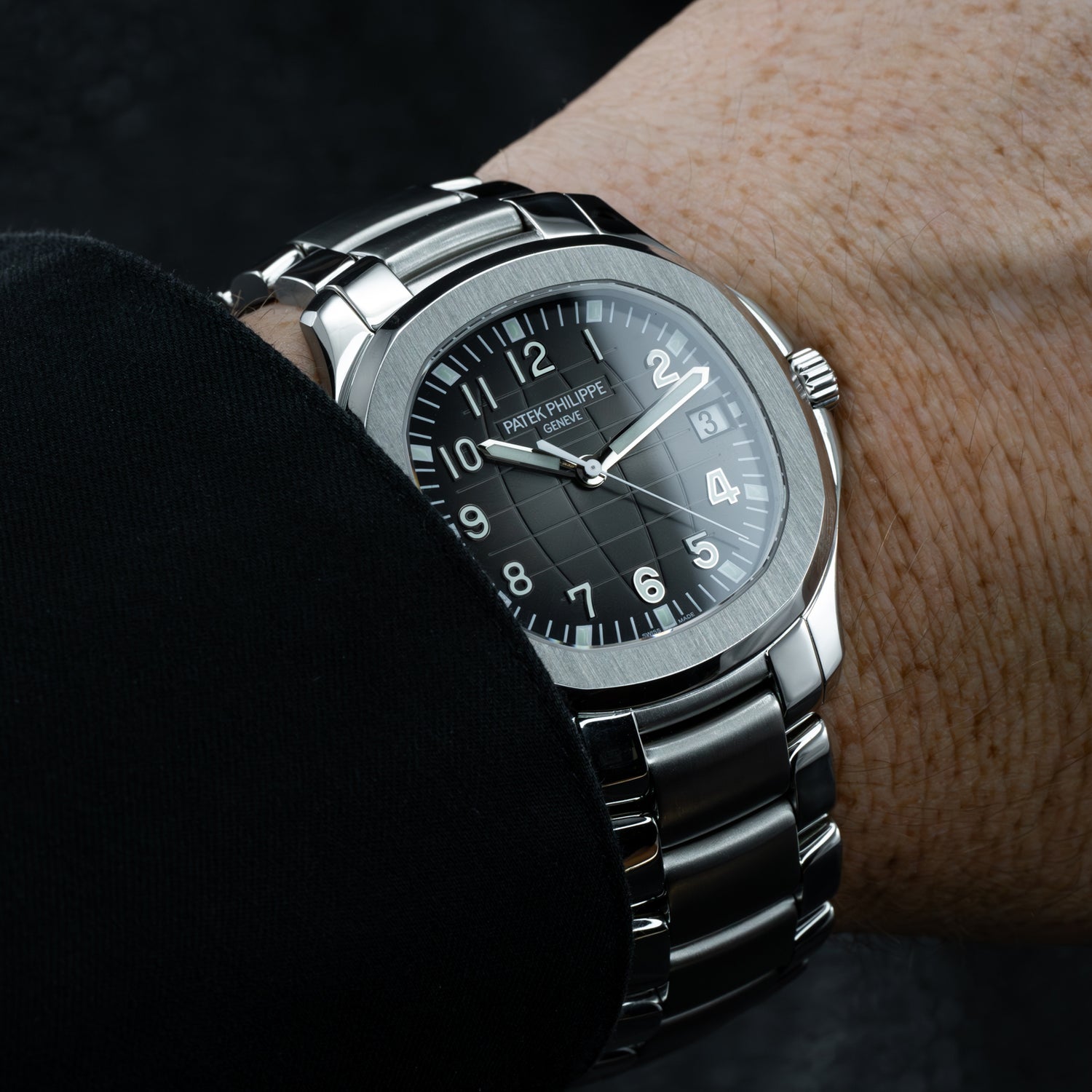

Cartier built one of the first widely worn men's wristwatches, the Santos, for a friend who needed to check the time without letting go of an airplane's controls. That founding logic, design solving an actual problem, still runs through the brand today. This guide walks through what Santos, Tank, Ballon Bleu, and Panthère actually look and feel like, whether the in-house movements are real, and what to check before buying pre-owned.
I hear Cartier described as a jewelry house that happens to make watches more often than I'd like, and it undersells the actual history every time. The brand's design decisions shaped how the entire industry thinks about wristwatches from the very start, and four collections carry that legacy forward today, each built around a genuinely different silhouette and a genuinely different buyer. That's what this Cartier buyer's guide walks through, family by family.
What's in this guide
- The Cartier design legacy, and why it matters to a buyer
- Santos
- Tank
- Ballon Bleu
- Panthère
- Materials: what each finish actually looks and feels like
- Bracelets and straps: the SmartLink system and beyond
- Does Cartier actually build in-house movements?
- Dial and size variety worth knowing
- Sizing: how a Cartier actually wears
- What each function actually does, day to day
- Notable references and configurations worth knowing
- A quick note on reference numbers
- How to choose: Santos vs Tank vs Ballon Bleu vs Panthère
- How Cartier compares to Rolex, Omega, and the rest
- What to check before buying pre-owned
- Price and value: what actually holds
- Where KROLUX fits in
The Cartier design legacy, and why it matters to a buyer
Most watch brands spend their marketing budget convincing you their movement is more precise, more magnetic-resistant, or more historically significant than the next brand's. Cartier rarely bothers, and it's worth understanding why before you look at a single reference. Cartier's actual contribution to the industry is the case itself. The Santos popularized the wristwatch as something a man could wear seriously. The Tank's rectangular proportions became a template other brands still reference a century later. Almost every square, rectangular, or cushion-cased watch on the market today owes something to a design decision Cartier made decades before most competitors existed as watchmakers at all.
That history changes how you should evaluate a Cartier purchase. You're not buying a tool built to survive a dive or a chronograph built to time a race. You're buying a piece of design history you get to wear, which is a genuinely different value proposition than almost anything else in this guide series, and worth keeping in mind as you read through what each line actually offers.
Start with the founding logic, because it explains everything that follows. Louis Cartier designed the Santos in 1904 for his friend Alberto Santos-Dumont, an early aviation pioneer who needed to check the time mid-flight without taking a hand off the controls to dig a pocket watch out of his jacket. That single practical need produced one of the first widely worn men's wristwatches, at a time when wristwatches were considered a women's accessory and pocket watches dominated for men. Every major Cartier line since has carried some version of that same instinct, design that solves a real problem first, with the look following as a consequence of that solution.
Santos: the original, and still the sportiest

On the wrist, the Santos reads sporty and architectural, a square case with exposed screws running around the bezel, the single most recognizable detail in the entire Cartier catalog, and a bracelet that flows directly into the case with almost no visible gap. It's the Cartier for someone who wants a watch that reads confident and a little industrial rather than purely dressy, closer in spirit to a tool watch that happens to come from a jewelry house.
The 2018 relaunch brought a genuinely useful mechanical detail: the QuickSwitch and SmartLink systems let you swap between bracelet and strap without tools and adjust the bracelet's length yourself, link by link, by hand. That's a real, tangible convenience most buyers don't expect from a brand this formal, and it's the kind of detail that separates a design house that actually thinks about daily wear from one that's purely focused on the silhouette. We've individually sourced two Santos pieces, the smoky green ombré complete set and a skeleton dial execution, both large-sized cases.
Tank: the most restrained icon in the catalog
Cartier launched the Tank in 1917, inspired by the aerial view of tank treads during World War I, and it's become one of the most consistently worn watch designs across an entire century of collectors, chosen specifically for its restraint rather than its presence. Rectangular case, Roman numerals, a sword-shaped set of hands, and the signature blue cabochon crown, a small sapphire set into the winding crown that's become a quiet Cartier signature of its own.
On the wrist it reads formal and understated, the watch you wear when you want to be dressed correctly rather than noticed. Several sub-lines exist within the family, the Tank Louis Cartier stays closest to the original 1917 proportions, the Tank Française adds an integrated metal bracelet for a slightly sportier daily-wear version, and the Tank Must offers a more accessible entry point into the silhouette, typically in a larger, more contemporary case than the vintage-proportioned Louis Cartier reference. Sizing runs notably small by modern-watch standards across most Tank references, part of the point, this was never meant to compete with a dive watch for wrist presence. We don't have one sourced right now, reach out and we'll help you source one.
Ballon Bleu: the modern, rounded alternative
Launched in 2007, the Ballon Bleu is the newest of Cartier's major silhouettes and the one that reads least like a vintage reissue. The case is genuinely round rather than square or rectangular, with a distinctive domed crown guard that curves out from the case edge, holding that same signature blue cabochon in a more sculptural setting than the Tank's flat crown. It wears smoother and a little more contemporary on the wrist, without losing any of the brand's design language underneath.
It's the Cartier for a buyer who wants something distinctly Cartier without the vintage-square association the Santos and Tank both carry, a genuinely unisex-leaning silhouette that reads equally at home on a wide range of wrist sizes. Case sizes span roughly 28mm up through 46mm depending on the reference, one of the widest ranges in the entire Cartier catalog, which is part of why it works equally well as a first watch for a smaller wrist and a statement piece for a larger one. We don't have one sourced right now, reach out if a Ballon Bleu is what you're after and we'll help you source one.
Panthère: the jewelry-forward line
Originally introduced in the 1980s and revived in recent years, the Panthère leans hardest into Cartier's jewelry-house roots of any current line. Integrated metal bracelet, a flatter and more overtly decorative case profile, and a closer connection to the brand's panther motif that runs through Cartier's broader jewelry catalog. It wears more like a fine jewelry piece that happens to tell time than a traditional watch, and it's the line most often chosen by collectors who want Cartier's name and craft without any sport-watch or tool-watch language at all. Diamond-set bezel and dial options show up more frequently here than anywhere else in the catalog, reinforcing the jewelry-first read. We don't have one sourced right now, reach out and we'll help you source one.
Materials: what each finish actually looks and feels like
Stainless steel: the default across Santos and several Tank references, cool grey-white, durable, and the material that keeps the Santos specifically reading sporty rather than precious. It's the daily-wear choice across the catalog.
Yellow, rose, and white gold: offered across nearly every Cartier line, and the gold execution changes the read of a given silhouette more dramatically than it does on most sport-watch brands, a gold Tank reads considerably more formal than a steel one, where a gold Rolex sport watch mostly just reads more expensive.
ADLC-coated steel: a black, diamond-like carbon coating Cartier applies to select steel cases, giving a matte, almost gunmetal look that reads considerably more modern and understated than polished steel. It shows up periodically across Santos references and is worth knowing about even when we haven't sourced a specific ADLC piece recently, since it's a recurring option worth asking a dealer about.
Two-tone (steel and gold): common across Santos and Panthère references specifically, splitting the case and bracelet links between steel and gold for a warmer look than pure steel without the full cost and formality of solid gold.
Diamond-set bezels and dials appear across select references in every line except the most classic Tank executions, and the setting quality is worth examining closely in person, uneven stone sizing or visible gaps in a pre-owned piece are signs of either wear or a non-factory alteration, either of which affects value.
Bracelets and straps: the SmartLink system and beyond
The Santos's SmartLink bracelet is the standout mechanical detail across the whole catalog, a toolless quick-release system that lets the wearer swap between the integrated steel bracelet and a leather strap in seconds, and adjust bracelet length by hand without a jeweler's tool kit. It's a genuinely practical feature that most buyers don't expect walking in, and it solves a real problem, a bracelet sized slightly wrong is one of the most common reasons an otherwise-perfect watch sits in a drawer instead of on a wrist. The Tank line runs primarily on leather straps across its most classic references, reinforcing the dress-watch intent, though the Tank Française adds its own integrated metal bracelet for a sportier daily option. Ballon Bleu and Panthère both offer metal bracelet and leather strap configurations depending on the specific reference, with Panthère's integrated bracelet reading closest to fine jewelry construction of anything in the catalog.
Does Cartier actually build in-house movements?
Yes, and look, this surprises most people who assume Cartier is purely a design house riding on case shape alone. Cartier has developed genuine manufacture movements over the past two decades, including the automatic Calibre 1904 MC introduced in 2010, along with chronograph and complication calibers built entirely in-house rather than sourced from outside suppliers. The brand stays quieter about movement technology in its marketing than Omega or IWC, a deliberate positioning choice, and the substance is genuinely there for collectors who look for it.
What that means for you as a buyer: a modern Cartier pairs a well-designed case with genuine manufacture-level engineering underneath, on references carrying the in-house caliber, you're getting real mechanical substance that happens to be wrapped in a design language the brand doesn't feel the need to shout about. Cartier's high-complication work goes further than most buyers realize too, the brand's Fine Watchmaking division has produced genuinely serious tourbillons and other complications for collectors specifically chasing that side of the craft, a completely different conversation from the everyday Santos or Tank most people picture when they hear the name.
Dial and size variety worth knowing
Santos dial variety leans toward bold, contemporary colorways, the smoky green ombré piece we've sourced individually is a good example of how far the line has moved from a plain silver dial, alongside skeleton executions that expose the movement itself as the visual centerpiece. Tank dials stay closest to the original restrained formula, white or silvered with Roman numerals, though the Tank Must line has introduced more contemporary color options in recent years. Case sizes run a genuine range depending on the line, Santos alone spans small, medium, large, and extra-large depending on the exact reference, so the same silhouette can suit very different wrist sizes. Skeleton executions add a distinct visual category on top of color, less about dial hue and more about how much of the movement's architecture is on display.
Sizing: how a Cartier actually wears
Case size does more work in the Cartier catalog than in most sport-watch brands, because the silhouettes themselves aren't round, and a square or rectangular case wears differently against a wrist than a circular one does. A 35mm Santos and a 35mm round watch from another brand won't read the same size on the same wrist, the corners and proportions change the visual footprint in ways a single diameter number doesn't capture. As a rough rule, Santos and Ballon Bleu scale close to how you'd expect a round watch to scale, small for a slim wrist, large for a bigger one. Tank references run smaller than their case dimensions suggest, because the design was never built to compete for wrist presence in the first place, a Tank that looks modest in a product photo often reads exactly right once it's actually on. If wrist size is a genuine concern, ask to try the specific reference on before assuming a size number tells you what you need to know.
What each function actually does, day to day
Cartier doesn't stack complications the way a sport-watch flagship does, and that's consistent with the brand's whole approach, design carries the weight, function supports it quietly. Here's what you'll actually run into.
Date window (select Santos and Ballon Bleu references): a simple date display, present on some references and deliberately absent on others, particularly across the Tank family, where a date window would interrupt the clean dial layout the design depends on.
Chronograph (select Santos references): press the pusher and it starts timing, a stopwatch function layered onto the time display. It shows up periodically across Santos executions for buyers who want a genuine complication without leaving the silhouette they've chosen.
Skeleton and openworked dials (select Santos and Tank references, including the Skeleton piece we've sourced individually): a visual treatment more than a function in the traditional sense, and worth explaining on its own terms, the dial itself is removed or cut away so the movement's bridges and gear train become the visual design, engineering turned into decoration. It's a genuinely different way of wearing the same case, and it tells you at a glance whether the piece has a real mechanical movement inside rather than just implying one.
Notable references and configurations worth knowing

A handful of specific configurations come up often enough in conversation that they're worth knowing on sight. The Santos Skeleton, the execution we've individually sourced, strips the dial down to an openworked view of the movement itself, a genuinely different statement from a standard solid-dial Santos despite sharing the same case. ADLC-coated Santos references show up periodically in the secondary market and read considerably more modern and understated than the standard steel execution, worth asking about specifically if that matte black look is what you're after. On the Tank side, the Tank Louis Cartier in solid gold is the reference collectors most associate with the line's original 1917 proportions, while the Tank Française's integrated bracelet makes it the most daily-wearable Tank for a buyer who wants the silhouette without committing to a strap. We haven't sourced any of these except the Santos Skeleton, reach out if any of the others are what you're chasing and we'll help you source one.
A quick note on reference numbers
Cartier reference numbers are shorter alphanumeric strings than Rolex's or Omega's long numeric codes, but they still encode real information, the specific model, size, and material combination. Two watches both casually called "the Tank" can be genuinely different pieces once you check the actual reference, confirm it directly rather than relying on the family name alone, especially across a family with as many historical sub-lines as Tank carries.
Santos vs Tank vs Ballon Bleu vs Panthère: how do you actually choose?
Start with how formal you need the watch to read. If you want the most direct historical significance and a sportier daily-wear profile, the Santos is the answer, and the SmartLink bracelet system makes it genuinely versatile day to day. If you want the most restrained, universally appropriate dress option in the entire catalog, the Tank is the one to consider, a watch that works with nearly any outfit specifically because it doesn't try to compete for attention.
The Ballon Bleu is the pick if you want something distinctly Cartier without the vintage-square association, a rounder, more contemporary silhouette that still carries the brand's full design language, and its size range makes it the easiest of the four to fit to a specific wrist. The Panthère is the pick for a collector focused specifically on the jewelry-watch niche, more decorative presence, less traditional watch-collector signaling.
If you're buying your first serious watch and want maximum daily versatility, the Santos is the safest starting point of the four, sporty enough for most situations, dressy enough not to feel out of place in a suit. If this is a second or third piece and you already own something louder, the Tank is the natural complement, the watch that lets a collection breathe.
How does Cartier compare to Rolex, Omega, and the rest?
This is a different conversation than Omega vs Rolex or Tudor vs Rolex, because Cartier isn't really competing on the same axis. Rolex and Tudor win on tool-watch credibility and sport-watch resale liquidity. Omega and IWC win on loud, marketed engineering stories. Cartier wins on design significance, the Santos and Tank shaped how the entire industry thinks about wristwatch case design, in a way none of those other brands can claim about their own silhouettes.
For a buyer choosing between Cartier and a sport-watch brand, the real question is which category you're actually shopping in, rarely which one is the objectively better watch. A steel Rolex sport reference and a steel Cartier Santos answer different questions about what you want the watch to say, closer to two different categories than two competitors for the same slot. Where IWC and Omega lean on engineering credentials to justify their place next to Rolex, Cartier's case designs simply predate most of the brands it now gets compared against, and the comparison itself is really a category question dressed up as a brand question.
What should you check before buying a pre-owned Cartier?
Confirm whether the specific reference runs a genuine Cartier in-house movement or an older outsourced caliber, since both exist across the catalog and the distinction affects both mechanical substance and resale value. Check case material carefully, Cartier offers the same silhouettes across steel, gold, two-tone, and ADLC finishes that carry meaningfully different price points, and a mismatch between the listing description and the actual case material is a real red flag worth catching before you wire anything.
On a Santos specifically, test the SmartLink bracelet adjustment mechanism before buying, it should move smoothly and hold its length without slipping. On a skeleton or openworked piece, examine the movement itself closely under good light, since the whole point of the design is visibility, any wear, dust, or damage to the exposed bridges is far more noticeable than it would be hidden under a solid dial. And treat box, papers, and service history the same way you would with any serious purchase, complete documentation is the difference between a piece you can resell without a headache and one you can't. For the full pre-owned checklist that applies across any brand, here's the complete buying guide.
Price and value: what actually holds
Cartier's resale story runs differently than Rolex's or even Omega's, and it's worth being straightforward about that. The brand's value proposition is design significance and craft rather than speculative resale premium, and buyers who go in expecting Rolex-style appreciation on a Santos or Tank are shopping with the wrong expectations. Certain vintage Tank references and limited Santos executions have held meaningful collector interest, but that's the exception rather than the baseline across the catalog.
None of this is a guarantee, and anyone promising you guaranteed appreciation on a specific piece is selling you a story, the same warning that applies to any brand. Vintage and discontinued references, particularly early Tank executions and specific Santos configurations no longer in production, tend to command the strongest collector interest, while current-production pieces track closer to the brand's own retail positioning over time. Buy a Cartier because the design genuinely moves you, treat any resale strength as a bonus on top of a purchase you'd have made anyway.
Where does KROLUX actually fit into buying a Cartier?
Every piece we source gets authenticated before it's ever offered to a client, and we're selective about what we take on in the first place. Cartier's design significance means the fakes are genuinely good, and worth working with a dealer who can tell the difference before you wire anything. We source pieces individually, each with its own serial number and its own photos, rather than holding ongoing stock we restock and reorder, and right now that's landed us two Santos pieces. For anything else, including Tank, Ballon Bleu, or Panthère references, reach out and we'll help you find the right one. That's the whole point of this Cartier buyer's guide: know the design history before you buy into it, then come to us for the piece itself.