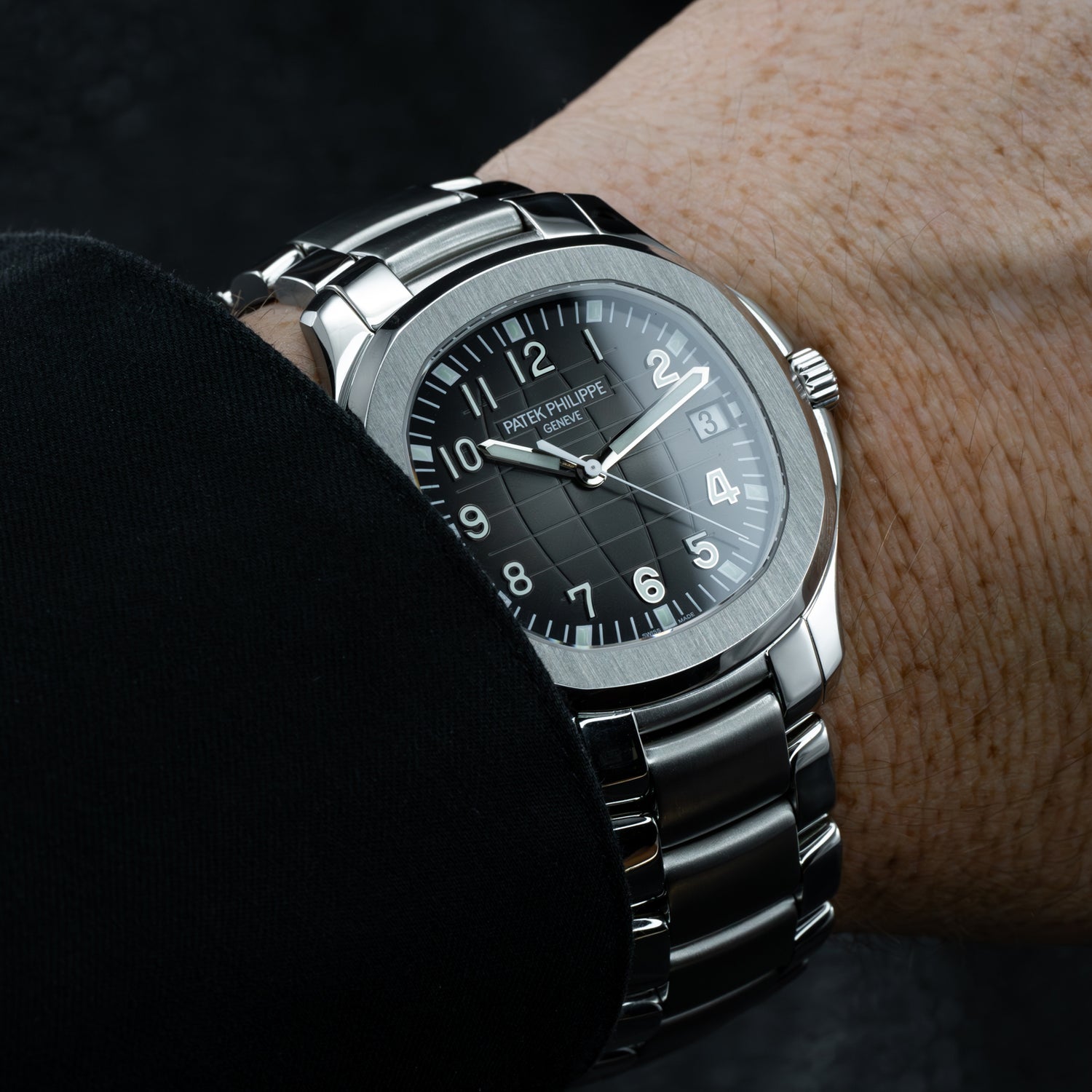

Case diameter is the number everyone fixates on, and it's genuinely the least reliable predictor of how a watch actually wears. Lug-to-lug length matters more for most wrists, thickness affects how a watch sits under a cuff, and the only truly reliable test is trying the piece on in person before you commit.
Sizing questions come up constantly, and the real answer disappoints people who want a simple formula. Fit is genuinely more complicated than one number on a spec sheet.
Why doesn't case diameter alone tell you how a watch will fit?
Case diameter measures the width of the case face, edge to edge, and it's the number every listing leads with, but it says nothing about how far the case extends past your actual wrist edges. Two watches with the identical 40mm diameter can wear completely differently depending on lug design and case shape, one sitting neatly within the wrist and another overhanging noticeably on either side.
What is lug-to-lug length, and why does it matter more?
Lug-to-lug measures the total length of the case from the top lug tip to the bottom lug tip, the actual footprint the case occupies on your wrist regardless of diameter. This is the number that predicts overhang far more reliably than diameter alone, and it's also the spec most brands bury deepest in their listings despite it mattering the most for actual fit.
A general guideline: lug-to-lug under about 47mm reads comfortably on most average wrists, while anything past 50mm starts to overhang noticeably on smaller wrists regardless of what the diameter number suggests.

Does thickness actually matter for fit?
Genuinely, yes, and it's the spec most overlooked entirely. A thick case can catch on shirt cuffs, sit awkwardly under a jacket sleeve, and simply feel heavier on the wrist than the same diameter in a thinner profile. Dress watches specifically depend on staying thin to slide comfortably under a cuff, which is exactly why manual-wind and slim automatic movements dominate that category.
Sports and dive watches naturally run thicker due to case construction and water resistance requirements, and that's an acceptable tradeoff for the category, but it's worth knowing going in rather than being surprised by it.

How does bracelet and strap width affect actual fit?
Lug width, the gap between the lugs where the strap or bracelet attaches, affects how proportional the whole piece looks on your wrist independent of case size. A case that reads well on paper can look visually unbalanced if the strap width feels too narrow or too wide relative to the case itself. This is a genuinely underrated factor in how "right" a watch ends up looking once it's actually on.
How should you actually figure out what fits before buying?
Try the piece on in person whenever possible, since no combination of specs fully substitutes for seeing it on your actual wrist. If you can't try it on directly, compare the lug-to-lug measurement against a watch you already own and like the fit of, using that as your genuine reference point rather than diameter alone.
Wrist circumference matters too but less than people assume, since two people with the same circumference can have very different wrist shapes, flatter versus rounder, that affect how a given case sits.
What sizing mistakes do buyers make most often?
Diameter alone gets treated as the whole answer, then buyers are surprised by overhang once the watch actually arrives. A similarly-sized piece from a different brand doesn't guarantee the same fit either, since lug design varies enough between manufacturers to change how a case sits meaningfully. Thickness is the one that gets underestimated most, especially with chronographs and dive watches that pack more movement and water resistance into the case.
If you're trying to figure out how a specific reference will actually wear before you commit to buying it, reach out. We can walk through the actual measurements that predict how it'll wear.